
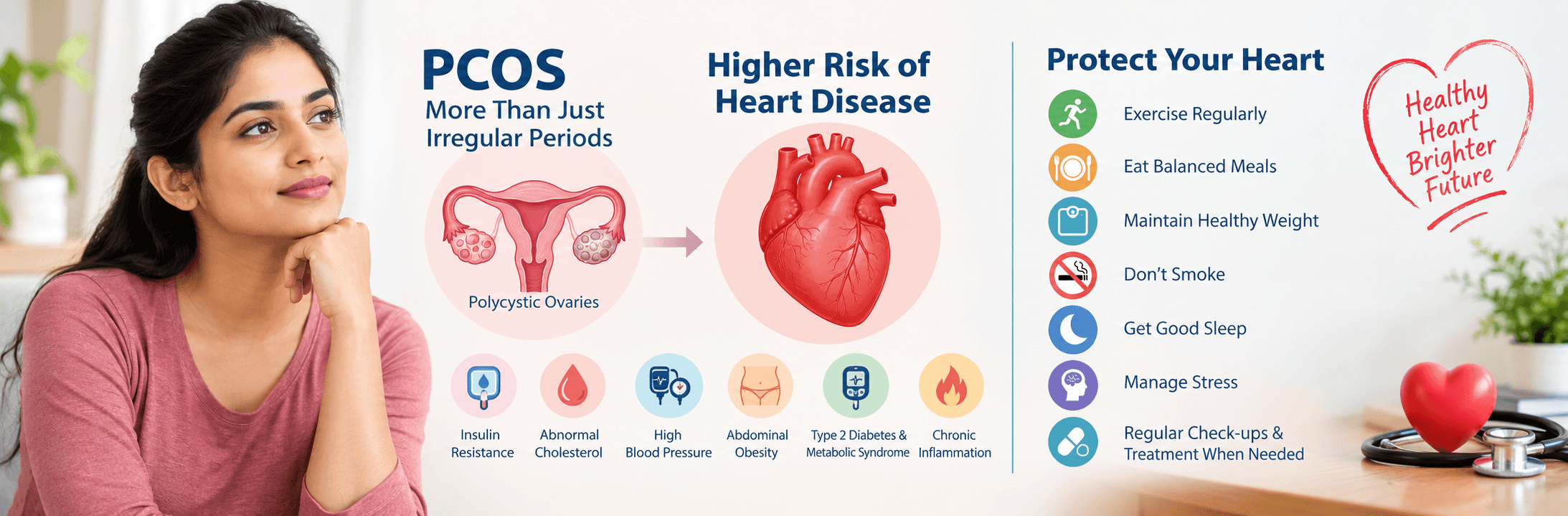


Polycystic ovary syndrome (PCOS) is usually talked about in terms of irregular periods, acne, excess hair growth, and fertility. But PCOS is also a metabolic condition, and over the long term it can affect the heart. Many women with PCOS are never told this. In this blog, we’ll explain how PCOS and heart disease are connected, how strong the evidence is, which checks to ask for, and what you can do to protect your heart, starting now.
What Is PCOS?
PCOS is a common hormonal condition in women of reproductive age. It is typically diagnosed when at least two of these three features are present: irregular or absent periods, signs of high androgens (male-pattern hormones) such as excess facial or body hair or acne, and polycystic-appearing ovaries on ultrasound. The exact cause isn’t fully understood, but insulin resistance and hormonal imbalance play central roles.
Fact: PCOS affects roughly 6% to 20% of women of reproductive age worldwide, depending on the diagnostic criteria used. In India, a pooled estimate puts prevalence at around 10%, though reported rates vary widely by region and population (source: PMC).
Why PCOS Matters for the Heart
PCOS doesn’t damage the heart directly in the way a blocked artery does. Instead, it clusters several risk factors that raise the long-term chance of heart disease.
1. Insulin Resistance
Fact: Insulin resistance, where the body responds poorly to insulin and produces more of it, is found in an estimated 65% to 95% of women with PCOS, including more than half of those at a normal weight (source: MDPI Medicina). Over time, insulin resistance raises blood sugar, blood pressure, and unhealthy fats in the blood.
2. Abnormal Cholesterol
Women with PCOS often have higher triglycerides and LDL (“bad”) cholesterol and lower HDL (“good”) cholesterol. Our guide on the lipid profile explains what these numbers mean.
3. High Blood Pressure
A meta-analysis found that women with PCOS have a higher prevalence of hypertension than women without it, and high blood pressure in PCOS often travels with insulin resistance and abdominal weight.
4. Weight Around the Waist
Abdominal (central) obesity is common in PCOS and strongly linked to heart risk. Our blog on weight and heart health explains why waist size matters, especially for South Asian women.
5. Type 2 Diabetes and Metabolic Syndrome
Metabolic syndrome, a cluster of high blood sugar, high blood pressure, abnormal cholesterol, and abdominal fat, is more common in PCOS and is a well-known stepping stone to diabetes and heart disease. See our guide on managing diabetes to protect your heart.
6. Chronic Low-Grade Inflammation
Researchers also report signs of chronic inflammation and reduced blood vessel flexibility in PCOS. Some recent laboratory work suggests PCOS may affect heart inflammation independently of metabolic factors, though this is still being studied.
How Strong Is the Evidence?
It’s worth being clear about what is and isn’t proven.
Fact: A meta-analysis found that women with PCOS had about 44% higher odds of coronary heart disease than women without PCOS (odds ratio 1.44), but did not find a significant association with heart attack on its own (source: PMC).
In plain terms:
- PCOS is associated with a higher risk of cardiovascular and metabolic disease, and experts increasingly treat it as a “risk-enhancing factor.”
- Most evidence comes from observational studies, and the actual rate of heart attacks and strokes in young women with PCOS is still being clarified.
- Having PCOS does not mean you will develop heart disease. It means your risk is worth watching and reducing early.
Indian Context: Earlier and Often Missed
Indian women face a double challenge. India has a high burden of PCOS, and South Asians are prone to insulin resistance and abdominal fat at lower body weights. A small study of women with PCOS at a south Indian infertility clinic found metabolic syndrome in 37.5% and abnormal blood fats in a very high proportion, particularly in women aged 25 and older or with central obesity (source: PMC). Because this study was in a hospital clinic, the figures can’t be applied to all women with PCOS, but they show why screening matters.
Heart disease also tends to appear earlier in Indians. Our blog on heart disease in women explains how symptoms can differ, and our post on early signs of a heart attack in women lists PCOS among the risk factors to know.
Which Checks Should Women With PCOS Ask For?
International PCOS guidelines recommend that all women with PCOS be assessed for cardiovascular risk factors, including obesity, smoking, cholesterol, blood pressure, blood sugar, and physical inactivity, and that overall risk be estimated with standard risk calculators (source: Fertility and Sterility).
A practical checklist to discuss with your doctor:
- Blood pressure at every visit, and at home if readings are borderline. See our guide on home blood pressure monitoring.
- Lipid profile (total cholesterol, LDL, HDL, triglycerides).
- Blood sugar tests: fasting glucose, HbA1c, and sometimes a glucose tolerance test.
- Weight, BMI, and waist circumference.
- Smoking and activity review.
- Pregnancy history: gestational diabetes or high blood pressure in pregnancy are heart-risk markers later in life.
Your doctor will decide how often to repeat these. For many women, it is at diagnosis and regularly afterward, with closer follow-up if any result is abnormal.
What Women With PCOS Can Do for Their Hearts
The encouraging news is that the same habits that improve PCOS also protect the heart, and benefits are achievable at any weight.
1. Move Your Body Regularly
Aim for regular moderate exercise, such as brisk walking, cycling, swimming, or yoga, with some strength training. Exercise improves insulin sensitivity even without weight loss.
2. Eat to Steady Your Blood Sugar
Favor vegetables, dal, whole grains and millets, nuts, and lean protein, and limit refined carbohydrates, sugary drinks, and fried food. Our post on heart-healthy Indian foods and cooking (“Heart Foods: Cooking Tips for Indian Kitchens”) has practical ideas.
3. Aim for Modest, Sustainable Weight Loss If Advised
For women who are overweight, even a modest loss can improve periods, insulin resistance, and cholesterol. Crash diets are not the answer, and weight is not the only story in PCOS.
4. Ask About Medicines
Depending on your situation, your doctor may suggest metformin (an insulin-sensitizing medicine), treatment for high cholesterol or blood pressure, or hormonal treatments. If you’re considering combined hormonal pills, tell your doctor if you smoke, have high blood pressure, or have migraines with aura, since these affect which options are safest.
5. Don’t Smoke
Smoking multiplies heart risk. Our guide on the impact of smoking on heart health explains how.
6. Prioritize Sleep and Mental Health
Anxiety, low mood, and poor sleep are more common in PCOS and can worsen metabolic and heart risk. Support from a doctor or counsellor is part of heart care, not separate from it.
When to See a Doctor Promptly
Don’t wait for a routine visit if you notice chest pain or pressure, unusual breathlessness, palpitations, fainting, or sudden swelling. If chest symptoms are severe, follow the steps in our guide on what to do during a heart attack.
In Conclusion
PCOS is more than a reproductive condition. It’s a lifelong metabolic one, and the heart is part of that story. The goal isn’t to frighten women but to prompt earlier, smarter action: asking for blood pressure, cholesterol, and blood sugar checks, building steady habits, and treating risk factors before they cause harm. Many women with PCOS go on to have healthy hearts, especially when risk is spotted and addressed early.
Key Takeaways
- PCOS affects about 6-20% of women worldwide and roughly 10% in India, and is linked to higher cardiometabolic risk.
- Insulin resistance, abnormal cholesterol, high blood pressure, abdominal fat, and metabolic syndrome are the main reasons PCOS raises heart risk.
- Evidence shows an association with coronary heart disease (about 44% higher odds in one meta-analysis), but the effect on heart attacks specifically is less clear.
- Women with PCOS should be screened for heart risk factors at diagnosis and regularly afterward.
- Exercise, a blood-sugar-friendly diet, no smoking, good sleep, and treatment when needed reduce risk, and benefits can occur even before weight changes.
- Having PCOS does not mean you will get heart disease; it means prevention should start early.
References
- Fertility and Sterility (ScienceDirect): Polycystic Ovary Syndrome: A “Risk-Enhancing” Factor for Cardiovascular Disease
- PMC: PCOS and the Risk of Coronary Heart Disease: A Meta-Analysis
- MDPI Medicina: The Cardiometabolic Risk in Women With PCOS: From Pathophysiology to Diagnosis and Treatment
- PMC: Prevalence of PCOS and Its Associated Risk Factors in Northeast India
- PMC: Prevalence of Metabolic Syndrome in Women With PCOS in South India
- PMC: Risk of Cardiovascular Diseases Associated With PCOS in India: A Review