
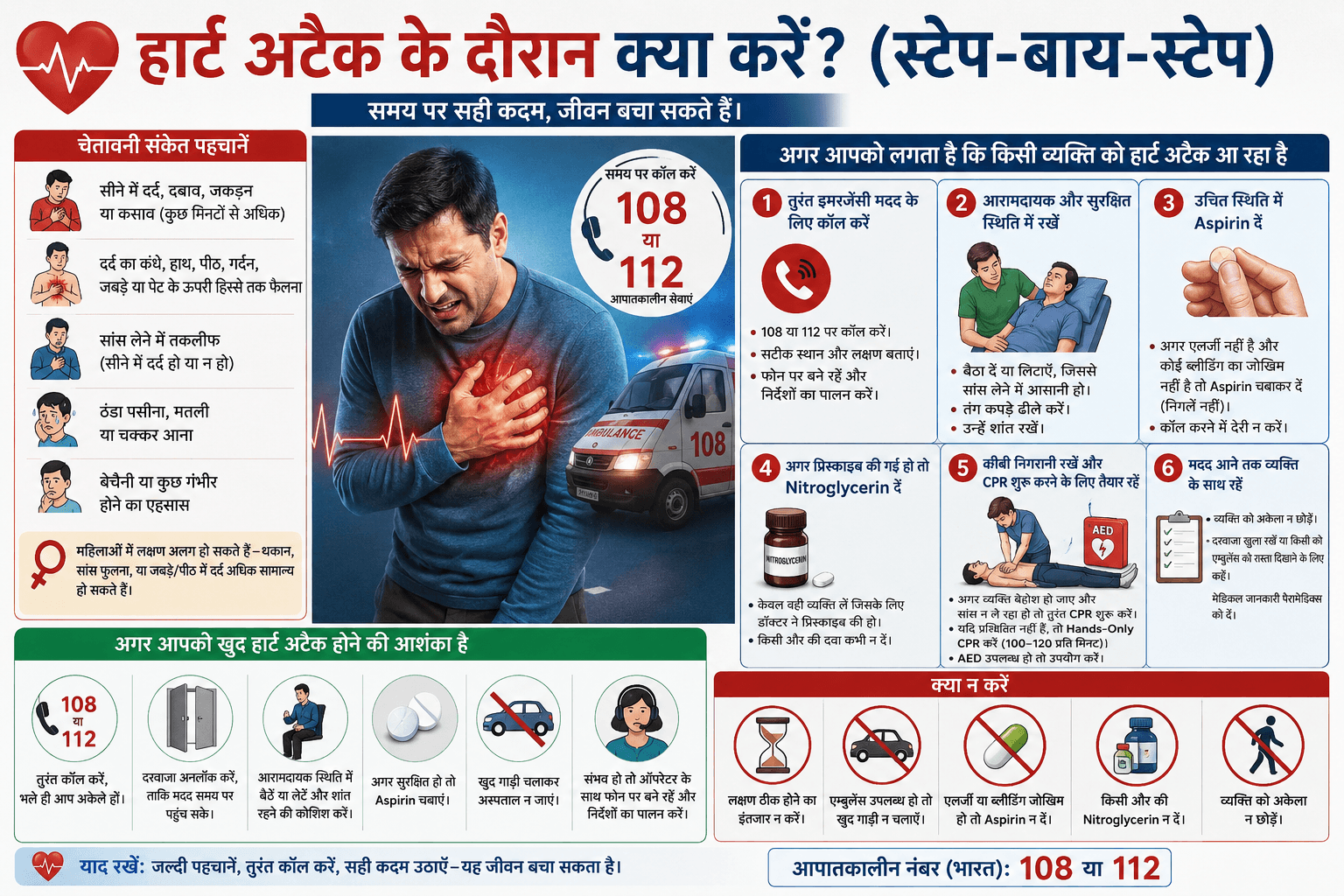


A heart attack is a race against time, the sooner blood flow is restored to the heart, the less damage occurs. Most people freeze in this moment simply because they don't know what to do next. This blog lays out exactly what to do, step by step, whether you're helping someone else or think you might be having a heart attack yourself.
Recognize the Warning Signs First
- Chest pain, pressure, tightness, or squeezing that lasts more than a few minutes
- Pain spreading to the shoulder, arm, back, neck, jaw, or upper abdomen
- Shortness of breath, with or without chest discomfort
- Cold sweats, nausea, or lightheadedness
- A sense of unease or impending doom
Fact: Symptoms can look different in women, often showing up as fatigue, breathlessness, or jaw/back pain rather than classic chest pain. Our post on heart disease in women explains this in detail. If any of these signs last more than a few minutes, don't wait to "see if it passes" - treat it as an emergency.
Step-by-Step: If You Think Someone Is Having a Heart Attack
Step 1: Call for Emergency Help Immediately
This is the single most important step, and it comes before everything else.
- In India, call 108 (ambulance emergency services, available in most states) or 112 (India's unified emergency number for police, fire, and ambulance).
- Give the exact location, describe the symptoms clearly, and stay on the line - the operator may guide you through the next steps.
- Do not delay this call to look for medicine, drive to the hospital yourself, or wait to see if symptoms improve.
Why It's Important: Emergency medical teams can begin life-saving treatment on the way to the hospital, and calling an ambulance is almost always faster and safer than trying to drive there yourself.
Step 2: Help the Person Into a Comfortable, Safe Position
- Have them sit or lie down in a position that eases breathing - often sitting up, leaning slightly back, with knees bent.
- Loosen any tight clothing, ties, or belts.
- Keep them as calm and still as possible, since panic and exertion increase the heart's oxygen demand.
Step 3: Give Aspirin, If Appropriate
- If the person is not allergic to aspirin and has no condition that makes aspirin dangerous, have them chew (not swallow whole) a regular aspirin tablet - chewing helps it act faster.
- If you're unsure whether it's safe to give aspirin, ask the emergency operator on the call - they can guide you.
- Never delay calling for emergency help in order to find or give aspirin first.
Fact: Aspirin works by helping prevent further blood clotting, which can reduce the extent of heart damage during a heart attack but it's a supportive measure, not a substitute for emergency care.
Step 4: Give Nitroglycerin, If Prescribed
- If the person has been prescribed nitroglycerin for a known heart condition, help them take it exactly as their doctor instructed.
- Never give someone else's nitroglycerin, dosing and safety depend on the individual's specific condition.
Step 5: Watch Closely and Be Ready to Start CPR
- Continuously monitor the person's breathing and responsiveness while waiting for help.
- If the person becomes unresponsive and stops breathing normally or has no pulse, begin CPR immediately:
- If you're not trained in CPR, perform hands-only CPR: push hard and fast in the center of the chest, at a rate of 100–120 compressions per minute, and continue until help arrives.
- If you are trained and confident, give 30 chest compressions followed by 2 rescue breaths, and repeat this cycle.
- If an AED (Automated External Defibrillator) is available nearby, use it - these devices give step-by-step voice instructions and are designed to be used by untrained bystanders.
Why It's Important: CPR keeps blood and oxygen circulating to vital organs when the heart itself can't do the job - every minute without it significantly lowers survival chances, while immediate CPR can more than double or triple them.
Step 6: Stay With Them Until Help Arrives
- Don't leave the person alone unless it's absolutely necessary to call for help.
- Keep the entrance/door unlocked or have someone direct the ambulance to your exact location to save critical time.
- Gather any relevant medical information (existing conditions, medications, allergies) to hand over to paramedics.
Step-by-Step: If You Think You're Having a Heart Attack Yourself
- Call for emergency help first - dial 108 or 112 immediately, even if you're alone.
- Unlock your door if possible, so paramedics can reach you without delay.
- Sit or lie down in a comfortable position and try to stay calm.
- Chew an aspirin if you're not allergic and have no condition that makes it unsafe.
- Do not drive yourself to the hospital - the physical and mental stress can worsen the situation, and losing consciousness while driving endangers others too.
- Stay on the phone with the emergency operator if possible, and follow their instructions.
What NOT to Do
- Don't wait to see if symptoms go away - many heart attacks build gradually, and delaying care leads to greater heart damage.
- Don't drive yourself or the person to the hospital if an ambulance is available paramedics can begin treatment en route.
- Don't give aspirin if there's an allergy or bleeding risk, and don't give someone else's prescribed nitroglycerin.
- Don't leave the person alone, except briefly if absolutely necessary to call for help.
In Conclusion
A heart attack is a medical emergency where minutes genuinely matter. Calling for emergency help immediately, keeping the person calm and safely positioned, giving aspirin if appropriate, and being ready to perform CPR are the core actions that can make the difference between life and death. Taking a basic CPR course even a short one is one of the most valuable things anyone can do to be prepared for a moment like this.
Key Takeaways
- Call 108 or 112 immediately - this comes before everything else, including finding aspirin or driving to the hospital.
- Help the person sit or lie down comfortably, loosen tight clothing, and keep them calm.
- Give aspirin (chewed, not swallowed) only if there's no allergy or bleeding risk - never delay the emergency call to do this.
- If the person becomes unresponsive and stops breathing normally, start CPR immediately - hands-only CPR is fine if you're untrained.
- Use an AED if one is nearby; it will guide you with voice instructions.
- Never drive yourself to the hospital during a suspected heart attack - call for an ambulance instead.
References
- Mayo Clinic: Heart Attack: First Aid
- UF Health: Heart Attack First Aid
- UMass Memorial Health: First Aid: Heart Attacks