
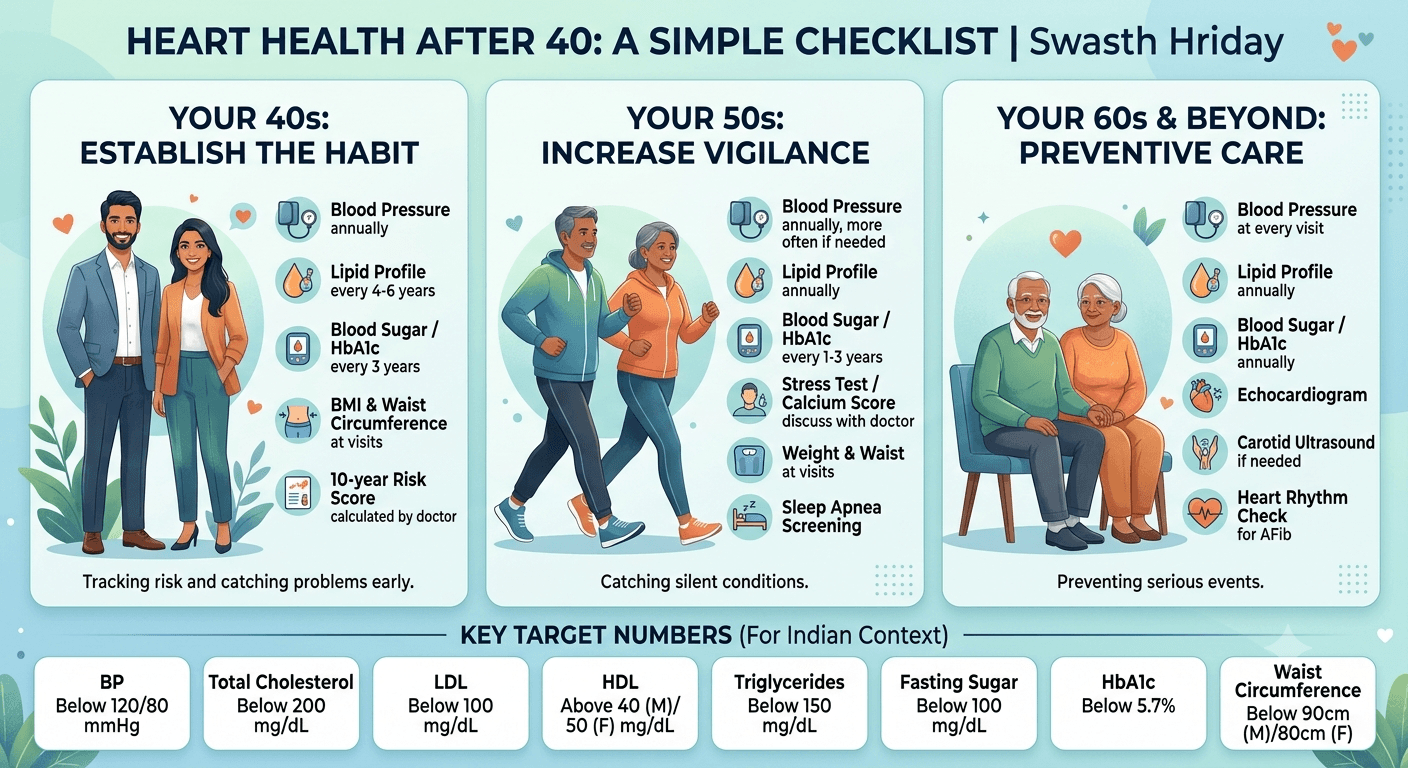


Turning 40 doesn't mean your heart suddenly becomes fragile but it is the age when doctors start paying closer attention, and for good reason. This is typically when blood pressure, cholesterol, and blood sugar begin drifting upward, often without any symptoms at all. Rather than another long explainer on why this happens, this blog is designed to be something you can actually use: a straightforward, checklist-style guide to what to get tested, how often, and what numbers to aim for, decade by decade.
Why 40 Is the Turning Point
Fact: Major cardiology guidelines specifically flag age 40 as the point where doctors should begin calculating your 10-year cardiovascular risk score - a formal estimate of your chances of a heart attack or stroke in the next decade, based on your blood pressure, cholesterol, and other factors (source: American Heart Association). Before 40, screening is mostly about establishing a healthy baseline; after 40, it shifts toward actively tracking risk and catching problems early.
Indian Context: Heart disease tends to strike roughly a decade earlier in Indians compared to Western populations, which is why many Indian cardiologists recommend starting some of these screenings particularly blood sugar and lipid profiles, a few years earlier than international guidelines suggest, especially if there's a family history of heart disease or diabetes.
Screening Checklist: Your 40s
This is the decade to build the habit, even if everything currently feels fine.
- Blood pressure: Check at least once a year if normal; more often if borderline or high. Home monitoring is a great habit to start now - our guide on home blood pressure monitoring walks through how to do it accurately.
- Lipid profile (cholesterol): Every 4–6 years if your levels are normal and you have no risk factors; annually if you have elevated cholesterol, diabetes, or a family history.
- Blood sugar / HbA1c: Every 3 years, or more frequently if you're overweight or have a family history of diabetes.
- BMI and waist circumference: At every doctor visit.
- 10-year cardiovascular risk score: Ask your doctor to calculate this starting this decade.
- Family history review: Update your doctor if any close relatives have had a heart attack, stroke, or been diagnosed with heart disease.
- Baseline ECG: Worth getting once in your 40s, even without symptoms, to establish what's "normal" for you.
Why It's Important: Many of these numbers can be quietly abnormal for years before symptoms appear. Establishing a baseline now makes it much easier for your doctor to spot a concerning trend later.
Screening Checklist: Your 50s
Screening frequency naturally increases in this decade.
- Blood pressure: Annually at minimum, more often if borderline or already on medication.
- Lipid profile: Annually, especially if you're on a cholesterol-lowering medication like a statin.
- Blood sugar / HbA1c: Every 1–3 years.
- Stress test or coronary calcium score: Worth discussing with your doctor if you have risk factors such as a family history of heart disease, smoking history, diabetes, or high blood pressure.
- Weight and waist circumference: At every visit.
- Sleep screening: Ask about sleep apnea screening if you snore heavily, wake up tired, or have unexplained high blood pressure — untreated sleep apnea is an under-recognized strain on the heart.
What You Can Do: If you haven't already, this is a good decade to review all your medications with your doctor annually, since new prescriptions can interact with existing ones. Our guide on how to take heart medicines safely is a useful companion if you're newly on any heart medication.
Screening Checklist: 60s and Beyond
- Blood pressure: Check at every visit.
- Lipid profile: Annually.
- Blood sugar / HbA1c: Annually.
- Echocardiogram: Periodically, and especially if you notice new symptoms like breathlessness or fatigue.
- Carotid ultrasound: If you have risk factors for stroke.
- Heart rhythm check: Ask your doctor about screening for atrial fibrillation, which becomes significantly more common with age and can go unnoticed without a dedicated check like a Holter monitor.
- Medication review: Annually - as prescriptions accumulate over the years, interactions become more likely.
Why It's Important: By this stage, catching subtle changes early - a slightly irregular heartbeat, a gradual rise in blood pressure can prevent a serious event rather than just respond to one.
Target Numbers to Know, at a Glance
Measurement
- Blood pressure
- Total cholesterol
- LDL ("bad") cholesterol
- HDL ("good") cholesterol
- Triglycerides
- Fasting blood sugar
- HbA1c
- BMI
- Waist circumference
Healthy Target
- Below 120/80 mmHg
- Below 200 mg/dL
- Below 100 mg/dL
- Above 40 mg/dL (men) / 50 mg/dL (women)
- Below 150 mg/dL
- Below 100 mg/dLHbA1c
- Below 5.7%
- 18.5–24.9
- Below 90 cm (men) / 80 cm (women) - using South Asian-specific cutoffs
Indian Context: Standard international waist circumference and BMI cutoffs are generally too lenient for South Asian populations, who tend to develop cardiovascular risk at lower body weights than Western populations. This is why Indian cardiology guidelines often recommend the tighter waist circumference targets shown above, along with a lower LDL cholesterol goal for those already at elevated risk.
Daily and Weekly Habit Checklist
Screenings tell you where you stand - daily habits are what actually move the numbers.
- 30 minutes of moderate physical activity, most days of the week
- Home blood pressure checks if you have hypertension or borderline readings
- Limit added salt, fried snacks, and sugary drinks
- 7–8 hours of sleep most nights
- No smoking; limit or avoid alcohol
- A regular stress-management routine - yoga, meditation, or whatever genuinely works for you
Warning Signs That Need Prompt Attention
Regardless of your screening schedule, don't wait for your next appointment if you notice:
- Chest pain or pressure
- Breathlessness during mild activity
- Swelling in the legs, ankles, or feet
- Irregular or unusually fast heartbeat
- Unexplained fatigue or dizziness
In Conclusion
Heart health after 40 isn't about overhauling your life overnight — it's about consistency. A yearly blood pressure check, a lipid profile every few years, and a handful of daily habits do more for your long-term heart health than any single dramatic change ever could. Use this checklist at your next doctor's visit, and revisit it as you move through each decade — your targets and testing frequency will naturally shift as you do.
Key Takeaways
- Age 40 is when doctors typically begin calculating your 10-year cardiovascular risk score - start tracking your numbers from this decade onward.
- Blood pressure and cholesterol checks should become routine, non-negotiable habits, increasing in frequency with each decade.
- Key targets to remember: BP under 120/80, LDL under 100, HbA1c under 5.7%, with tighter waist circumference targets for South Asians.
- Indians often develop cardiovascular risk earlier and at lower body weights than Western populations — screening a little earlier is often reasonable.
- Most of these numbers change silently — don't wait for symptoms to start paying attention.
References
- American Heart Association: Heart-Health Screenings
- Cross County Cardiology: Which Heart Screenings or Tests Should I Have, and How Often?
- Cardiac Care Associates: The Importance of Regular Heart Screenings
- International Chest Pain Clinic: Cholesterol Testing Guidelines by Age and Risk Level