
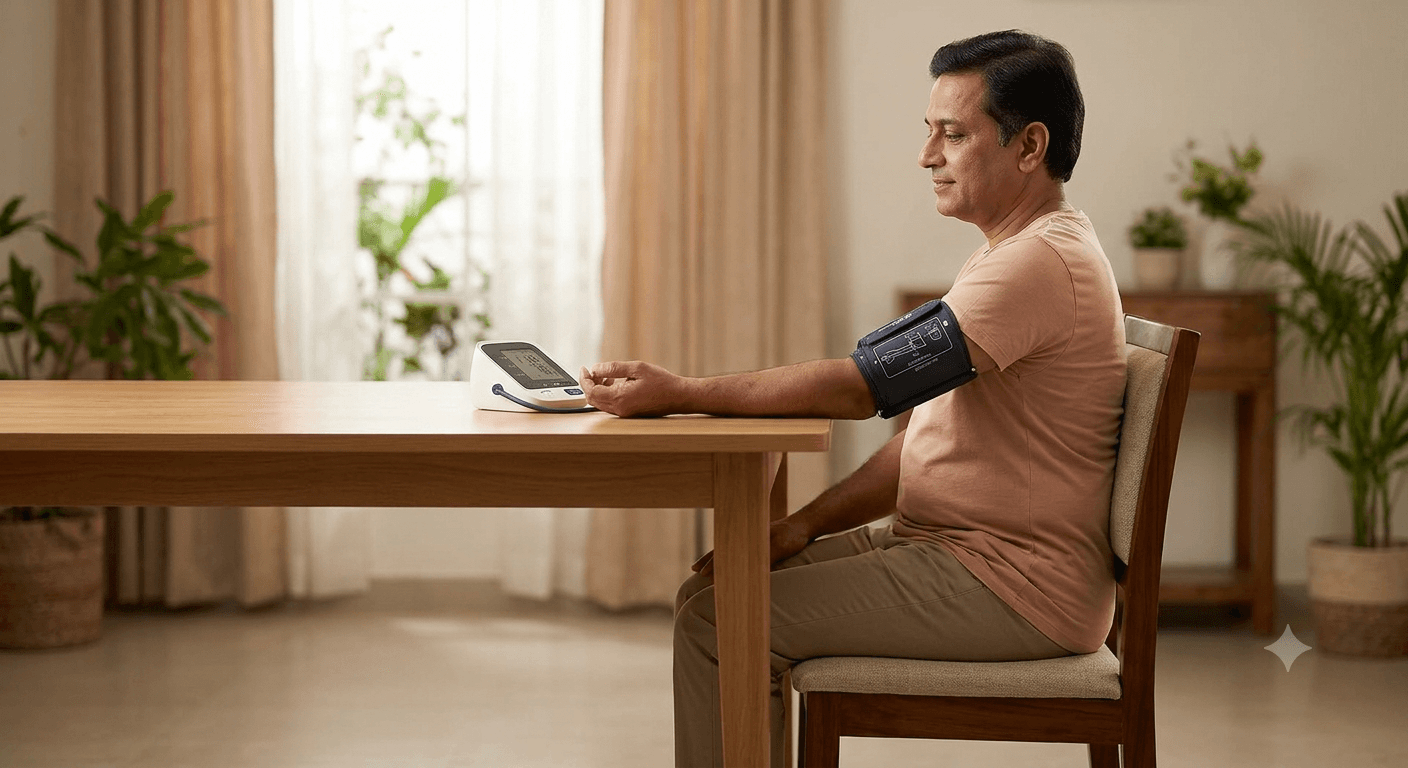


Checking your blood pressure at home sounds simple, strap on the cuff, press a button, read the number. But small mistakes in technique can throw your reading off by a surprising amount, sometimes leading to unnecessary worry or, worse, a false sense of reassurance. Since high blood pressure often has no symptoms at all, getting an accurate home reading can be one of the most valuable habits for protecting your heart.
In this blog, we'll walk through how to choose the right monitor, the correct way to measure your blood pressure at home, common mistakes to avoid, and how to make sense of your numbers.
Why Home Blood Pressure Monitoring Matters
Blood pressure naturally rises and falls throughout the day, and a single reading taken at the doctor's clinic doesn't always tell the full story. Some people experience "white coat hypertension" - higher readings simply due to the stress of being at a clinic while others have "masked hypertension," where their blood pressure is actually high at home despite looking normal during a doctor's visit.
Fact: Major health bodies including the American Heart Association and the U.S. Preventive Services Task Force now recommend confirming a hypertension diagnosis using out-of-office readings, since home monitoring often reveals a more accurate, real-world picture of blood pressure than a single clinic visit (source: AHA/ACC).
Indian Context: India is home to an estimated 199 million adults with elevated blood pressure, yet studies consistently show that awareness, treatment, and control rates remain low in some regions, only around 1 in 10 people with hypertension have it properly under control. Regular home monitoring is one of the simplest ways to close that gap.
Choosing the Right Home Blood Pressure Monitor
1. Pick an Upper-Arm Monitor
Upper-arm cuff monitors are considered more reliable than wrist or finger devices. Wrist monitors are more sensitive to positioning errors and tend to give less consistent readings.
2. Get the Correct Cuff Size
A cuff that's too small or too large can significantly distort your reading. Measure your upper arm circumference and check the manufacturer's sizing chart, or ask your doctor or pharmacist for guidance.
3. Choose a Validated, Automatic Device
Look for a monitor that's been clinically validated for accuracy, and one that automatically inflates and deflates, these are generally easier to use correctly than manual pump models.
How to Measure Your Blood Pressure Correctly
Getting an accurate reading depends heavily on preparation and posture. Here's the step-by-step approach recommended by cardiology guidelines:
Before You Measure
- Avoid smoking, caffeine, or exercise for at least 30 minutes beforehand.
- Empty your bladder - a full bladder can raise your reading.
- Sit quietly and rest for at least 5 minutes before taking a measurement. Don't talk or use your phone during this time.
While You Measure
- Sit in a chair with back support, feet flat on the floor, legs uncrossed.
- Rest your bare arm on a table or armrest so the cuff sits at the same height as your heart.
- Position the cuff directly on bare skin, not over clothing - this alone can distort readings by a significant margin.
- Keep your arm relaxed and stay still and silent during the reading.
Taking Multiple Readings
- Take two readings, about one minute apart, and record both.
- For an initial diagnosis or when tracking a new medication, aim for two readings in the morning and two in the evening, over about a week, as many guidelines recommend.
Common Mistakes That Distort Your Reading
- Measuring over clothing: Can throw off readings by a wide margin.
- Talking or moving during the reading: Even light conversation can raise the numbers.
- Wrong arm position: An arm that's unsupported or below heart level tends to give a falsely high reading.
- Skipping the rest period: Measuring immediately after walking in or feeling rushed can inflate your numbers.
- Using the wrong cuff size: One of the most common and most overlooked sources of inaccurate readings.
Understanding Your Blood Pressure Numbers
Blood pressure is recorded as two numbers - systolic (pressure when your heart beats) over diastolic (pressure when your heart rests between beats). Broadly:
- Normal: Below 120/80 mmHg
- Elevated: Systolic 120–129 with diastolic below 80
- Hypertension (various stages): 130/80 mmHg and above, with higher stages carrying greater risk
Your doctor will interpret your specific numbers in the context of your health history, so don't rely on a single reading - patterns over days and weeks matter far more than any one measurement.
Keeping Your Monitor Accurate
What You Can Do:
- Bring your home monitor to your next doctor's visit and compare its reading with the clinic's equipment.
- Have your monitor's accuracy checked at least once a year, or as recommended by the manufacturer.
- If you drop or damage your device, have it re-checked before trusting its readings again.
When to Contact Your Doctor
- Your readings are consistently at or above 130/80 mmHg, especially if this is new.
- You notice a sudden, significant spike in your readings.
- You experience symptoms like severe headache, chest pain, shortness of breath, or vision changes alongside a high reading, this may need urgent medical attention.
- You're unsure whether your monitor or technique is giving you accurate results.
In Conclusion
Home blood pressure monitoring puts valuable, ongoing information about your heart health directly in your hands but only if it's done correctly. A properly sized cuff, the right posture, and a few minutes of quiet rest beforehand can be the difference between a misleading number and one your doctor can actually act on. Make it a consistent habit, track your readings over time, and always loop your doctor in on what you're seeing.
Key Takeaways
- Home monitoring often gives a more accurate, real-world picture of blood pressure than a single clinic visit.
- Use a validated, upper-arm monitor with the correct cuff size for the most reliable readings.
- Sit still, support your arm at heart level, and avoid clothing under the cuff - small posture mistakes can distort results significantly.
- Take two readings, about a minute apart, in both the morning and evening, especially when tracking a new diagnosis or medication.
- Have your monitor's accuracy checked against clinic equipment at least once a year.
- Consistently high readings (130/80 mmHg or above) warrant a conversation with your doctor.
References
- American Heart Association (AHA): Monitoring Blood Pressure at Home
- PLOS Medicine: Hypertension Screening, Awareness, Treatment, and Control in India