
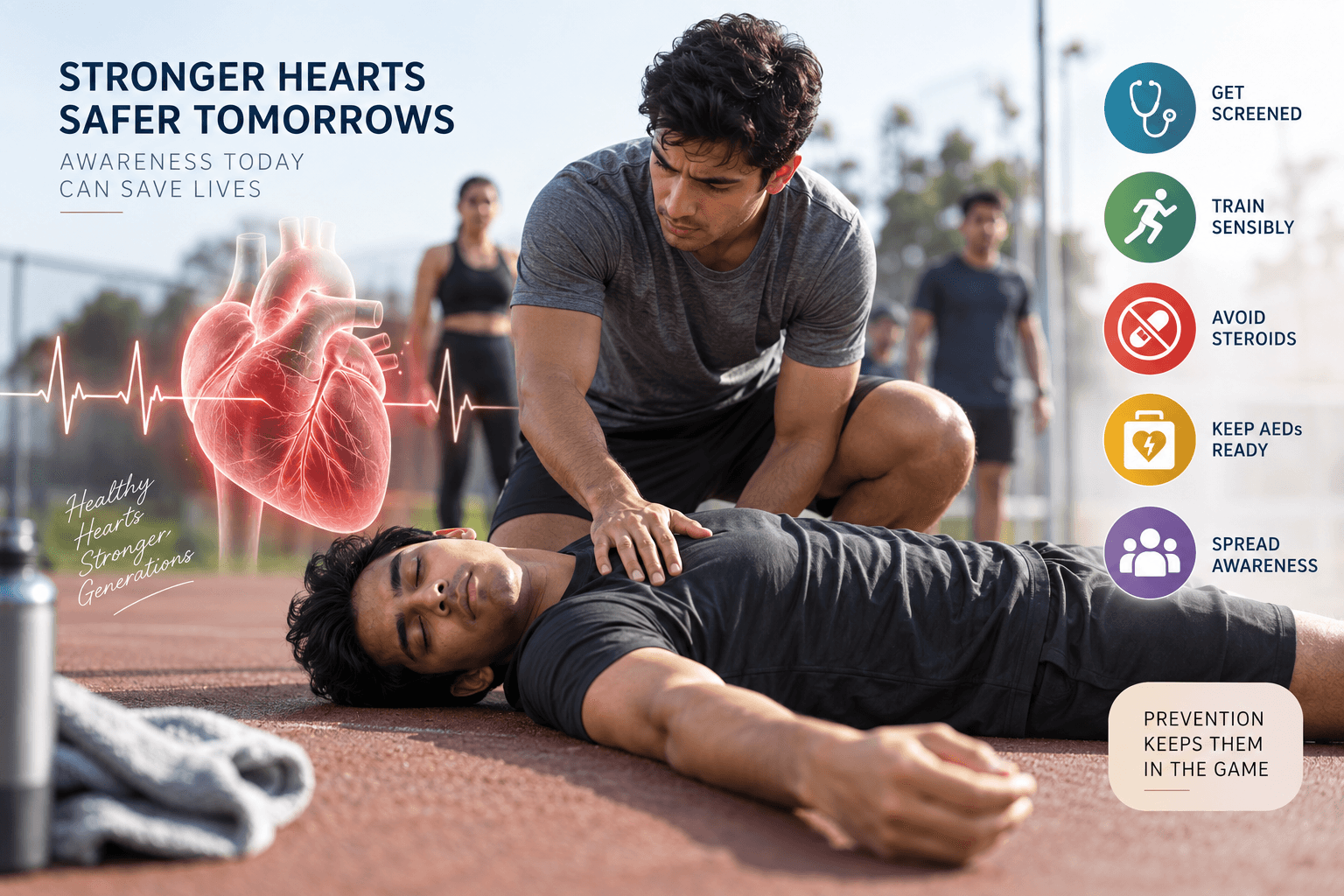


A young, seemingly healthy athlete collapses mid-game or mid-workout and never gets up - it's one of the most unsettling stories in sports, precisely because it seems to defy logic. How can someone so fit be at risk? The uncomfortable answer is that fitness and cardiac risk aren't the same thing, and several underlying heart conditions can remain completely silent until the moment intense exertion exposes them. In this blog, we'll explain what actually causes sudden cardiac death in young athletes, why it's been in the news in India recently, and what genuinely reduces the risk.
What Is Sudden Cardiac Death?
Sudden cardiac death (SCD) is an unexpected death caused by the heart suddenly stopping its normal rhythm, typically during or shortly after physical exertion. In young athletes, it's almost always linked to an underlying heart condition, often one that was never diagnosed, because it never caused symptoms until that moment.
Fact: Studies estimate the incidence of SCD in young competitive athletes at somewhere between 0.5 and 2 cases per 100,000 athletes per year, though estimates vary considerably by sport, population, and study methodology (source: PMC).
The Main Causes
1. Hypertrophic Cardiomyopathy (HCM)
A genetic condition in which the heart muscle becomes abnormally thickened, disrupting the heart's normal electrical rhythm and increasing the risk of a fatal arrhythmia during intense exertion. HCM is widely cited as one of the most common causes of SCD in young athletes, particularly in the United States, and affects up to 1 in 200 people in the general population - many of whom have no symptoms before a cardiac event.
2. Congenital Coronary Artery Anomalies
Some people are born with coronary arteries that follow an abnormal path, which can become compressed during intense physical exertion and cut off blood flow to the heart. This is responsible for a meaningful share of SCD cases in young athletes, generally cited as the second most common cause after HCM.
3. Arrhythmogenic Right Ventricular Cardiomyopathy and Inherited Arrhythmias
Conditions like long QT syndrome and arrhythmogenic right ventricular cardiomyopathy affect the heart's electrical system directly, sometimes without any structural changes visible on standard tests, making them particularly hard to detect.
4. Myocarditis
Inflammation of the heart muscle, often triggered by a viral infection, can temporarily destabilize the heart's rhythm - this is one reason athletes are generally advised against intense training while recovering from significant viral illness.
5. Commotio Cordis
A rare but dramatic cause - a direct, blunt impact to the chest (from a ball, puck, or another player) at a precise, vulnerable moment in the heartbeat can trigger a fatal arrhythmia, even in an athlete with an entirely normal, healthy heart. This is most commonly seen in sports like baseball, cricket, and hockey.
Why This Is a Growing Concern in India Right Now
Indian Context: Sudden cardiac death has become an increasingly visible concern in India, driven partly by a string of recent, high-profile cases among young actors, models, and fitness enthusiasts. Research shows that SCD tends to occur 5 to 8 years earlier in Indians compared to Western populations, and cardiovascular disease already accounts for over a quarter of all deaths in the country. Cardiologists have specifically flagged the rise of gym-related sudden deaths among seemingly fit young Indians, pointing to a combination of overexertion, anabolic steroid use, and extreme, socially-driven fitness pressure as contributing factors not just undiagnosed heart conditions alone (source: The Week, 2026).
Warning Signs That Shouldn't Be Ignored
Because these conditions are often silent, any of the following symptoms in a young athlete deserve prompt evaluation rather than being brushed off as "just being unfit" or "pushing too hard":
- Fainting or near-fainting during or right after exercise
- Chest pain or unusual tightness during exertion
- Unexplained, disproportionate breathlessness during activity
- Heart palpitations or a sensation of the heart racing/skipping
- Unusual fatigue that doesn't match the level of exertion
- A family history of sudden death, especially in a relative under 50
Prevention: What Actually Reduces the Risk
1. Pre-Participation Cardiac Screening
Why It's Important: Landmark research from Italy's Veneto region found that a structured screening program combining a physical exam, medical history review, and ECG — was associated with a significant reduction in sudden deaths from HCM among screened athletes over time.
What You Can Do:
- Ask about ECG-based screening before starting intense, competitive training, especially if there's any family history of heart disease or unexplained early death.
- Take a thorough family history seriously - a relative who died suddenly and young is a meaningful red flag worth mentioning to a doctor.
2. Train Sensibly, Not Extremely
- Avoid sudden, extreme jumps in training intensity, especially after a period of inactivity or illness.
- Never use anabolic steroids or unregulated "fitness" supplements to accelerate results - these have been directly implicated in the recent rise of cardiac events among young, seemingly fit individuals.
- Don't train through significant viral illness; give your body adequate recovery time, since myocarditis can develop silently during this period.
3. Have Emergency Response Ready
Fact: Immediate use of an Automated External Defibrillator (AED) during sudden cardiac arrest significantly improves survival odds - yet a meaningful proportion of victims still don't survive even with resuscitation, underscoring that prevention and rapid response both matter enormously (source: World Netball Cardiac Screening Guidelines).
What You Can Do:
- Sports facilities, gyms, and schools should have accessible AEDs and staff trained in CPR.
- If you witness someone collapse during or after exercise, follow the emergency steps outlined in our guide on what to do during a heart attack - starting CPR immediately and calling for emergency help is critical in the first few minutes.
In Conclusion
Sudden cardiac death in young athletes is rare, but it's rarely as random as it appears in the vast majority of cases, an underlying, previously silent heart condition is the true cause, sometimes worsened by extreme training practices or steroid use. Appropriate pre-participation screening, sensible training intensity, and having emergency response equipment on hand are the most meaningful ways to reduce this risk, both for competitive athletes and everyday gym-goers.
Key Takeaways
- Sudden cardiac death in young athletes is most often caused by hypertrophic cardiomyopathy, coronary artery anomalies, or inherited arrhythmias - conditions that are frequently silent until a cardiac event occurs.
- India has seen a recent rise in cardiac deaths among young, seemingly fit individuals, linked partly to overexertion, steroid use, and extreme fitness culture.
- Warning signs like fainting during exercise, chest pain, or a family history of sudden death should always be evaluated, not dismissed.
- Pre-participation cardiac screening, including ECG, has been shown to meaningfully reduce sudden deaths from conditions like HCM.
- Having AEDs and CPR-trained staff readily available at sports facilities significantly improves survival odds when a cardiac event does occur.