
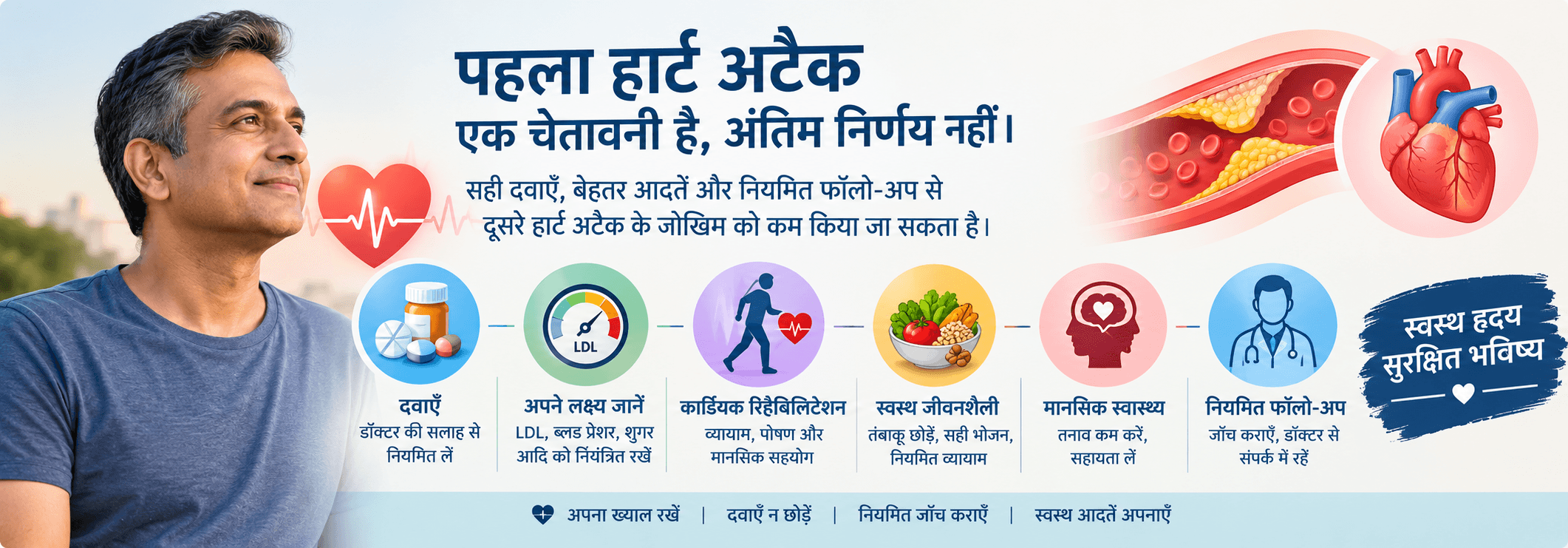


A heart attack is a turning point. The emergency is over, but the underlying condition, plaque in the arteries, is still there. The good news is that the months and years after a first heart attack are when your choices matter most. In this blog, we’ll lay out a clear roadmap of what changes after your first heart attack: the medicines you’ll take, the numbers you’ll aim for, the habits that count, and the follow-up that keeps you on track.
Why the Time After a Heart Attack Matters So Much
Fact: Doctors describe the first year after a heart attack as a particularly vulnerable period. Research on secondary prevention shows that the biggest gap isn’t usually the hospital prescription, but whether patients complete the full follow-up pathway after discharge: staying on medicines, getting cholesterol rechecked, attending rehab, and sustaining lifestyle changes (source: PMC).
In other words, a second heart attack is not inevitable, but preventing it takes ongoing effort.
Step 1: Take Your Medicines Exactly as Prescribed
Most people leave the hospital on several heart medicines. Each has a specific job.
Antiplatelets (Aspirin and a Second Blood Thinner)
Fact: The 2025 ACC/AHA guideline recommends dual antiplatelet therapy, aspirin plus a second antiplatelet drug, for at least 12 months as the default for most patients after an acute coronary syndrome who are not at high bleeding risk (source: American Heart Association).
Why It’s Important: If you’ve had a stent, stopping these drugs early can cause a clot to form inside it. Never stop them on your own, even before a dental procedure or surgery. Our guide on common blood thinners for heart patients explains how they work.
High-Intensity Statin
The same guideline recommends a high-intensity statin for all patients after a heart attack, with the option to add ezetimibe. Statins lower LDL (“bad”) cholesterol and help stabilize existing plaque so it’s less likely to rupture. Our posts on statins cover benefits and side effects in detail.
Beta-Blocker and ACE Inhibitor or ARB
Beta-blockers slow the heart and reduce its workload, and are especially important if your heart’s pumping function (ejection fraction) is reduced. ACE inhibitors or ARBs lower blood pressure and protect the heart muscle, particularly in people with diabetes, hypertension, or heart failure. See our comparison of beta-blockers vs. ACE inhibitors.
What You Can Do:
- Keep a written list of every medicine, dose, and its purpose.
- Never stop or change a dose without asking your cardiologist.
- Set daily alarms and use a pillbox. Our guide on how to take heart medicines safely has more tips.
Step 2: Know Your Numbers
After a heart attack, your targets become stricter. Your cardiologist will personalize them, but these are the commonly used goals:
Measurement: Typical Goal After a Heart Attack
- LDL cholesterol: Below 70 mg/dL; European guidelines aim for below 55 mg/dL and at least a 50% reduction from baseline
- Blood pressure: Generally below 130/80 mmHg
- HbA1c (if diabetic): Individualized by your doctor
- Smoking: None
- Weight: BMI and waist within healthy range
Fact: The ACC/AHA guideline recommends a fasting lipid panel 4 to 8 weeks after starting or changing cholesterol medicine, and says it is reasonable to intensify treatment if LDL stays at 55 to 69 mg/dL despite maximum statin therapy (source: AHA). If your LDL isn’t at goal, ask whether an add-on medicine is appropriate rather than assuming your current dose is enough.
Step 3: Join Cardiac Rehabilitation
Cardiac rehab is one of the most effective, and most underused, parts of recovery. It combines supervised exercise, education, nutrition guidance, and emotional support.
Fact: The 2025 ACC/AHA guideline recommends referral to cardiac rehabilitation after a heart attack, with home-based programs as an option for patients who can’t attend in person (source: AHA).
Our guide on what cardiac rehabilitation involves walks through the three phases and what to expect.
Step 4: Change the Habits Behind the Blockage
Medicines work best alongside lifestyle changes.
- Quit smoking and all tobacco. This is the single most powerful change a smoker can make after a heart attack.
- Eat for your heart. Favor vegetables, whole grains, dal, and nuts, and limit fried food, excess salt, sugar, and ghee.
- Move daily. Build up gradually as your doctor and rehab team advise, aiming for regular moderate activity.
- Manage weight, especially belly fat.
- Limit alcohol. Check with your cardiologist about what is safe for you.
- Sleep well and manage stress. Poor sleep and chronic stress raise blood pressure and strain the heart.
- Get your flu vaccine every year, as recommended for people with heart disease.
Step 5: Look After Your Mind
Feeling anxious, low, or fearful after a heart attack is very common. Many survivors worry about every twinge in the chest. These feelings deserve attention, and untreated depression can make it harder to stick to medicines and rehab.
What You Can Do:
- Talk openly with your doctor about mood, sleep, and anxiety.
- Lean on family, and consider joining a cardiac rehab group or support network.
- Don’t hide worries to appear “strong.” Getting help early is part of recovery.
Step 6: Keep Every Follow-Up
- Attend all scheduled visits, even when you feel fine.
- Get blood tests (cholesterol, sugar, kidney function) done when advised.
- Ask for an echocardiogram if your doctor advises it, to check heart function after the attack.
- Report new symptoms promptly rather than waiting.
Know the Warning Signs and Your Emergency Plan
Another heart attack can feel different from the first. Know the signs, and have a plan:
- Chest pressure, pain, or tightness, or pain spreading to the arm, jaw, or back
- Unusual breathlessness, cold sweat, nausea, or lightheadedness
- Unexplained fatigue, especially in women and people with diabetes
If you notice any of these, call 108 or 112 immediately and follow the steps in our guide on what to do during a heart attack. Share this plan with your family so they know exactly what to do.
Indian Context: The Treatment Gap
Fact: A review of Indian registries and cohorts found that among eligible coronary artery disease patients, self-reported use of aspirin was about 49%, of clopidogrel about 37%, and of statins about 51%, with far lower use in practices without electronic health records (source: ScienceDirect). Earlier audits in Rajasthan found statin use was lowest at the primary-care level, at around 21% (source: Vascular Health and Risk Management).
These figures come from different studies and time periods, so they shouldn’t be read as a single national number. But they point to a consistent pattern: too many Indian patients are not on the full set of proven medicines. If you or a family member has had a heart attack, ask your cardiologist directly: “Am I on all the recommended medicines, and are my numbers at goal?”
In Conclusion
A first heart attack is a warning, not a verdict. Taking the right medicines every day, reaching your cholesterol and blood pressure targets, joining cardiac rehab, quitting tobacco, caring for your mental health, and keeping every follow-up together make a real difference to your chances of avoiding a second event. Think of it as a long-term partnership with your cardiologist, where you do the daily work and they guide the plan.
Key Takeaways
- The first year after a heart attack is a vulnerable period; completing the full follow-up pathway is what protects you.
- Guidelines recommend dual antiplatelet therapy for at least 12 months (for most patients) and a high-intensity statin for all. Never stop these without your cardiologist’s advice.
- Aim for LDL below 70 mg/dL (below 55 mg/dL in European guidelines) and blood pressure generally below 130/80 mmHg.
- Cardiac rehabilitation is recommended after a heart attack, with home-based options if needed.
- Quitting tobacco, eating well, staying active, sleeping well, and managing stress all reduce risk.
- Indian data show many patients are not on the full set of proven medicines. Ask your doctor whether your treatment is complete.
- Know the warning signs and call 108 or 112 immediately if they appear.
References
- American Heart Association: Top Things to Know: 2025 Guideline for the Management of Patients With Acute Coronary Syndromes
- European Society of Cardiology: Long-Term Clinical Management After an Acute Coronary Syndrome
- PMC: One-Year Gaps in Comprehensive Secondary Prevention After Acute Myocardial Infarction
- ScienceDirect: Secondary Prevention of Cardiovascular Diseases in India: Findings From Registries and Large Cohorts
- Vascular Health and Risk Management: Low Use of Statins and Other Coronary Secondary Prevention Therapies in India