


Chest pain is one of the most frightening symptoms a person can experience and understandably so, since it's often the first thing associated with a heart attack. But here's the reassuring truth: most chest pain evaluated in emergency rooms and clinics turns out to have nothing to do with the heart at all. In this blog, we'll walk through the most common non-cardiac causes of chest pain GERD, anxiety, and musculoskeletal strain, how they differ from cardiac pain, and why ruling out your heart always comes first, no exceptions.
A critical note before we go further: This blog is meant to inform, not to help you self-diagnose in the moment. If you're currently experiencing chest pain and you're unsure of the cause, treat it as a possible cardiac emergency and seek medical attention immediately. Our guide on what to do during a heart attack walks through the exact steps to take.
Why Non-Cardiac Chest Pain Happens So Often
The chest is a crowded space - it contains not just the heart, but the lungs, esophagus, ribs, cartilage, muscles, and nerves, many of which share overlapping nerve pathways. This is precisely why pain originating from the esophagus or chest wall can feel remarkably similar to heart-related pain.
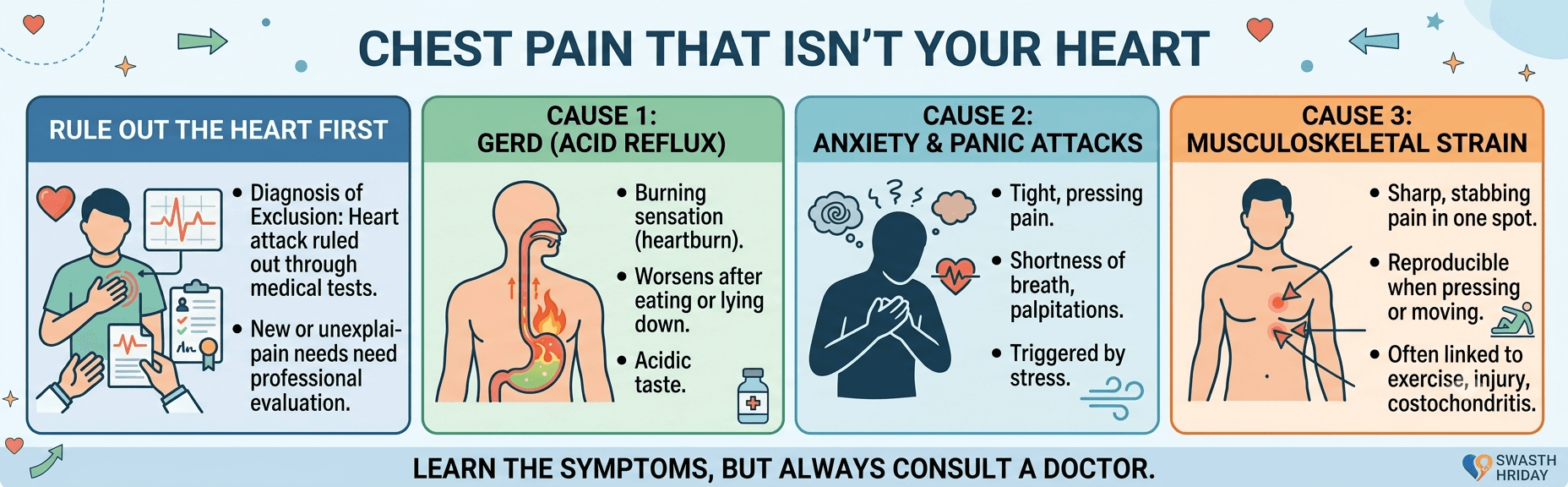
Fact: Doctors only diagnose "non-cardiac chest pain" after actively ruling out heart-related causes first through tests like an ECG and cardiac enzyme bloodwork - it's a diagnosis of exclusion, not a first guess (source: Cleveland Clinic). This is exactly why anyone with new or unexplained chest pain should always get it medically evaluated rather than trying to self-diagnose using an article like this one.
Cause 1: GERD (Acid Reflux)
Fact: GERD is the most common non-cardiac cause of chest pain, responsible for up to 40% of all non-cardiac chest pain cases (source: Doctronic).
What It Feels Like
- A burning sensation, often described as "heartburn," typically behind the breastbone
- Worsens after eating, when lying down, or when bending over
- Often accompanied by a sour or bitter taste in the mouth, or regurgitation
- May improve with antacids
Why It Mimics Heart Pain
The esophagus runs directly alongside the heart, and the nerves serving both structures overlap significantly meaning pain signals from a spasming or irritated esophagus can genuinely feel like cardiac chest pain, including radiating pressure in the chest.
What You Can Do: If your doctor suspects GERD as the cause, they may recommend a trial of acid-reducing medication if it clearly relieves your symptoms, this can help confirm GERD as the source, but only after cardiac causes have been ruled out first.
Cause 2: Anxiety and Panic Attacks
Fact: Chest pain caused by panic attacks can last anywhere from 5 to 20 minutes and comes with sweating, shortness of breath, and heart palpitations that can be genuinely difficult to distinguish from a real cardiac event, even for experienced clinicians (source: Doctronic).
What It Feels Like
- A tight, pressing, or heavy sensation in the chest
- Often accompanied by rapid heartbeat, shallow breathing, sweating, trembling, or a sense of impending doom
- Frequently triggered by stress, though it can also occur seemingly "out of nowhere"
- Usually doesn't worsen with physical exertion or movement, unlike cardiac pain
Why It Mimics Heart Pain
During anxiety or a panic attack, the body's fight-or-flight response floods the system with adrenaline, causing muscles to clench, breathing to become rapid and shallow, and the heart to race producing physical sensations that closely resemble a cardiac event.
Interesting Fact: Research shows panic disorder is common among people who repeatedly seek emergency care for chest pain, and heart-focused fear itself worrying intensely that the pain is cardiac can actually intensify the physical sensation of chest pain, creating a difficult cycle.
Cause 3: Musculoskeletal Strain
What It Feels Like
- Sharp, aching, or stabbing pain, often in a specific, localized spot
- Reproducible or worsened by pressing on the area, taking a deep breath, or certain movements
- Often linked to recent physical activity, poor posture, or an injury
- One common form, costochondritis, involves inflammation of the cartilage connecting the ribs to the breastbone
Why It Mimics Heart Pain
Because it occurs in the chest, any pain here naturally triggers concern about the heart but the key distinguishing feature is that this pain typically changes with movement, breathing, or pressure on the area, which cardiac pain generally does not.
What You Can Do: Once serious causes have been ruled out, musculoskeletal chest pain often responds well to rest, ice or heat application, and over-the-counter anti-inflammatory medication like ibuprofen.
Key Differences: Cardiac vs. Non-Cardiac Chest Pain
Feature : More Suggestive of Heart & More Suggestive of Non-Cardiac
- Trigger : Worsens with physical exertion, improves with rest & Often unrelated to exertion; may worsen after eating (GERD) or with movement (musculoskeletal)
- Location : Central/left chest, may radiate to arm, jaw, back & Often localized to one specific, reproducible spot
- Quality : Crushing, squeezing, or pressure-like & Burning (GERD), sharp/stabbing (musculoskeletal), tight/fluttering (anxiety)
- Reproducible with touch : Rarely & Often, with musculoskeletal causes especially
- Accompanying symptoms : Breathlessness, sweating, nausea, dizziness & Regurgitation/sour taste (GERD), trembling/racing thoughts (anxiety)
Why It's Important: These are general patterns, not a diagnostic checklist - many of these features genuinely overlap, and doctors remain especially cautious in people with existing cardiac risk factors like high blood pressure, diabetes, or being over 60, since chest pain in these patients deserves extra scrutiny regardless of how "textbook" non-cardiac it seems.
When to Always Seek Immediate Medical Attention
Regardless of what you suspect the cause might be, treat chest pain as a potential emergency if it's:
- New, sudden, or severe
- Accompanied by breathlessness, sweating, dizziness, or nausea
- Radiating to the arm, jaw, neck, or back
- Occurring alongside known cardiac risk factors like high blood pressure, diabetes, or a family history of heart disease
In Conclusion
Most chest pain isn't a heart attack but the only way to know that for certain is through proper medical evaluation, not guesswork based on symptoms alone. GERD, anxiety, and musculoskeletal strain are all common, generally manageable causes of chest pain that can feel remarkably like cardiac pain. Understanding these patterns can genuinely ease unnecessary worry once your heart has been cleared but that clearance always has to come first.
Key Takeaways
- Non-cardiac chest pain is more common than cardiac chest pain, but it's only diagnosed after ruling out the heart first.
- GERD causes up to 40% of non-cardiac chest pain, typically presenting as burning pain that worsens after eating or lying down.
- Anxiety and panic attacks can produce chest pain, palpitations, and breathlessness that are genuinely difficult to distinguish from a cardiac event.
- Musculoskeletal pain is often localized, reproducible by pressing on the area, and linked to movement or recent physical strain.
- Any new, severe, or symptom-accompanied chest pain should always be treated as a possible emergency, regardless of how "non-cardiac" it seems.
References
- Cleveland Clinic: Noncardiac (GERD) Chest Pain: Location, Symptoms, Treatment
- Michigan Medicine: When Chest Pain Isn't a Heart Attack
- Doctronic: What Is Non-Cardiac Chest Pain?
- Cardiac Care Associates: Chest Pain: Is It Your Heart or Something Else?