
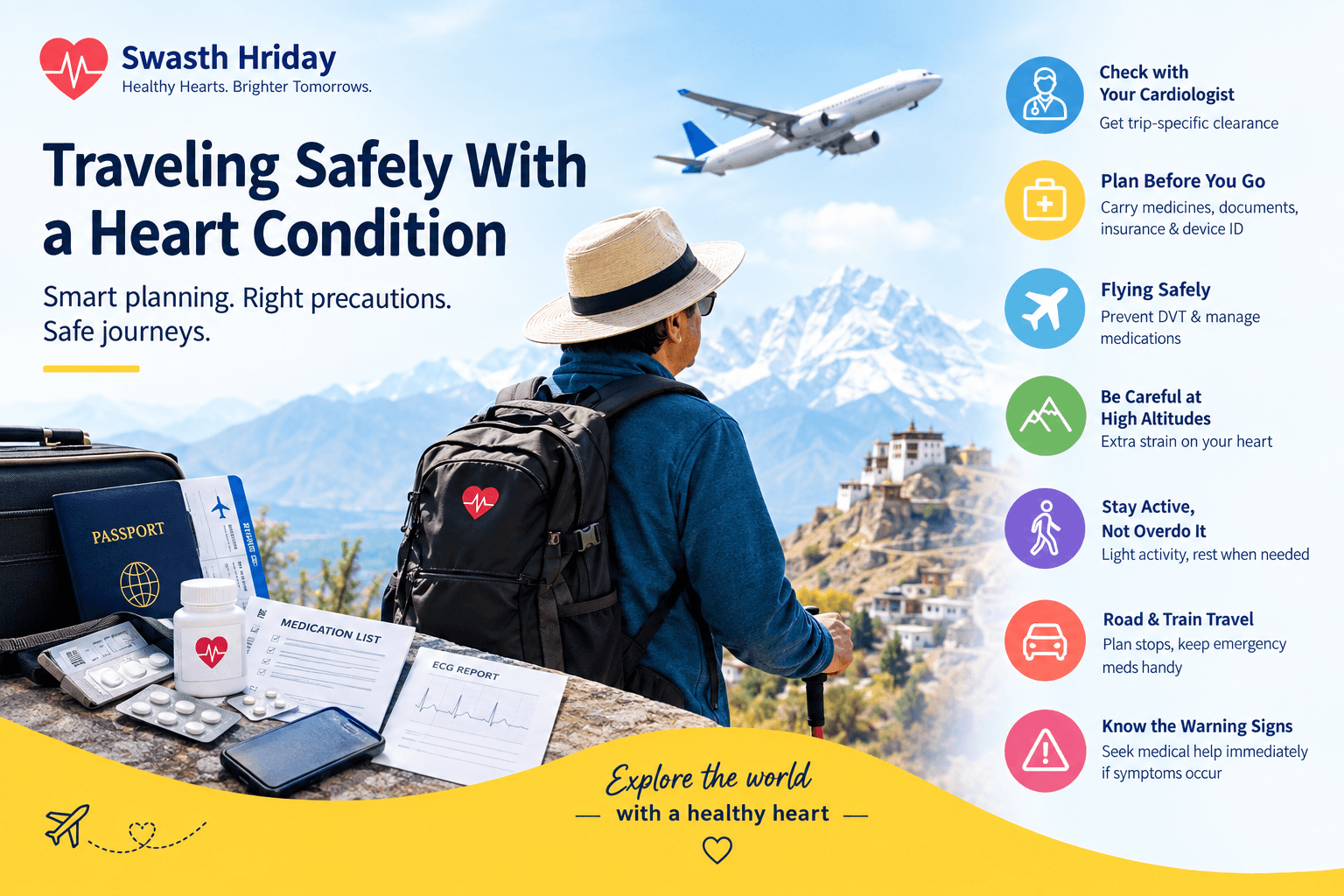


A heart condition doesn't have to mean giving up travel but it does mean planning a little differently. From cabin pressure changes on a flight to the thin air of a Himalayan hill station, certain travel situations put extra strain on a heart that's already working harder than it should. In this blog, we'll cover practical, doctor-backed precautions for traveling safely with a heart condition, including a few considerations specific to popular Indian travel destinations.
Before You Book: Check With Your Cardiologist
Fact: Experts generally advise a waiting period after major cardiac events before flying - heart attack patients are usually cleared to fly 2-4 weeks after the event with a cardiologist's approval, while atrial fibrillation patients are typically advised to wait 1-2 weeks after an ablation procedure (source: McLeod Health). If your condition is stable and well-controlled, most cardiologists will clear you to travel but always get specific, trip-by-trip clearance if you're under ongoing cardiac care, rather than assuming last year's approval still applies.
Why It's Important: Conditions like unstable angina, recent bypass surgery, uncontrolled heart failure, or a recent stent procedure generally require a stabilization period before travel is considered safe.
Preparing Before You Travel
What You Can Do:
- Carry a written list of your medications, doses, and your cardiologist's contact details.
- Keep copies of your prescriptions and a recent ECG report - digital copies on your phone or email work well as backup.
- If you have a pacemaker or ICD, carry your device ID card, since it may need to be shown at security checkpoints.
- Purchase travel insurance that specifically covers pre-existing cardiac conditions and medical evacuation, especially for international trips.
- Pack more medication than you think you'll need, in case of delays, and always keep it in your carry-on bag, never in checked luggage.
For more on managing your medication routine while away from home, our guide on how to take heart medicines safely has additional tips that apply directly to travel days.
Flying With a Heart Condition
Managing Deep Vein Thrombosis (DVT) Risk
Long periods of sitting on flights increase the risk of blood clots forming in the legs - a risk that's higher for people with heart failure or peripheral artery disease.
What You Can Do:
- Get up and walk the aisle briefly once every hour, when possible.
- Flex your feet and rotate your ankles periodically while seated.
- Consider wearing compression stockings on longer flights, especially if your doctor has recommended them before.
- Stay well hydrated - cabin air is significantly drier than normal indoor air, and dehydration can worsen circulation.
Managing Medication Timing Across Time Zones
What You Can Do:
- Try to keep taking your medications - particularly blood pressure medicines and blood thinners - according to your home time zone rather than the local one, to avoid disrupting your dosing schedule.
- Set a phone alarm as a reminder, since jet lag makes it easy to lose track of time.
Airport Security
Full-body scanners are generally considered safe for people with pacemakers or ICDs, but these devices can occasionally trigger metal detector alarms. Carrying your device ID card and informing security staff beforehand can help avoid confusion or delay.
High-Altitude Travel: A Special Consideration for Indian Travelers
Popular Indian destinations like Ladakh, Manali, Shimla, and other Himalayan hill stations sit at altitudes where lower oxygen levels place extra demand on the heart - something that's easy to overlook when planning a scenic getaway.
Fact: At altitudes above roughly 2,500 meters, reduced oxygen availability triggers the heart to work harder - increasing heart rate, cardiac output, and blood pressure to compensate. For heart failure patients specifically, experts recommend avoiding an ascent of more than 300–500 meters per day, since rapid elevation gain can worsen symptoms (source: CardioSmart / American College of Cardiology).
Indian Context: Cardiologists commonly advise that people with severe heart failure, uncontrolled high blood pressure, or those recently recovering from a heart attack or stent procedure should avoid high-altitude destinations like Ladakh altogether, given the combination of thin air, physical exertion, and cold temperatures. If you do have a stable, well-controlled heart condition and still wish to visit these regions, allow extra days for gradual acclimatization, avoid overexertion, and stay closely attuned to any new symptoms like breathlessness or chest discomfort.
Managing Physical Activity While Traveling
- Stick to light-to-moderate activity levels, even on vacation - this isn't the time to attempt a strenuous trek you've never done before.
- If you're not normally physically active, don't suddenly start intense exercise just because you're on a scenic trip.
- Watch for warning signs like unusual breathlessness, chest discomfort, or dizziness during sightseeing or physical activity, and rest immediately if they occur.
Road and Train Travel Within India
- On long road trips, plan regular stops to stretch and move around, similar to flight precautions for DVT.
- Keep your emergency medication (such as prescribed nitroglycerin) easily accessible, not packed away in checked luggage or the trunk.
- Note the location of major hospitals along your route for longer journeys, particularly if traveling through more remote areas.
What to Do If Symptoms Occur While Traveling
If you experience chest pain, unusual breathlessness, dizziness, or other concerning symptoms while traveling, don't try to "push through" to your destination. Seek the nearest available medical facility immediately, and if it's a suspected heart attack, follow the emergency steps in our guide on what to do during a heart attack, including calling for emergency medical help right away.
In Conclusion
Traveling with a heart condition is very often possible - the key is preparation, not avoidance. Getting trip-specific clearance from your cardiologist, carrying your medical information and medications properly, staying mindful of DVT risk on long journeys, and being cautious with high-altitude destinations can go a long way toward keeping your trip both enjoyable and safe.
Key Takeaways
- Always get trip-specific clearance from your cardiologist, especially after a recent cardiac event or procedure.
- Carry medication lists, prescriptions, a recent ECG, and device ID cards (for pacemakers/ICDs) with you at all times.
- On flights, walk every hour and stay hydrated to reduce deep vein thrombosis risk.
- Keep taking heart medications on your home time zone schedule while traveling.
- High-altitude destinations like Ladakh and Manali can place significant extra strain on the heart - those with severe or unstable conditions should generally avoid them.
- If symptoms occur while traveling, seek medical help immediately rather than waiting to reach your destination.
References
- Harvard Health Publishing: Travel Tips for People With Heart-Related Risks
- McLeod Health: Fit to Fly? Heart Patient Tips on Travel
- CardioSmart / American College of Cardiology: Safety Precautions for Heart Patients Traveling to High Altitudes
- TripPrep.com: Cardiovascular Disease and Air Travel