
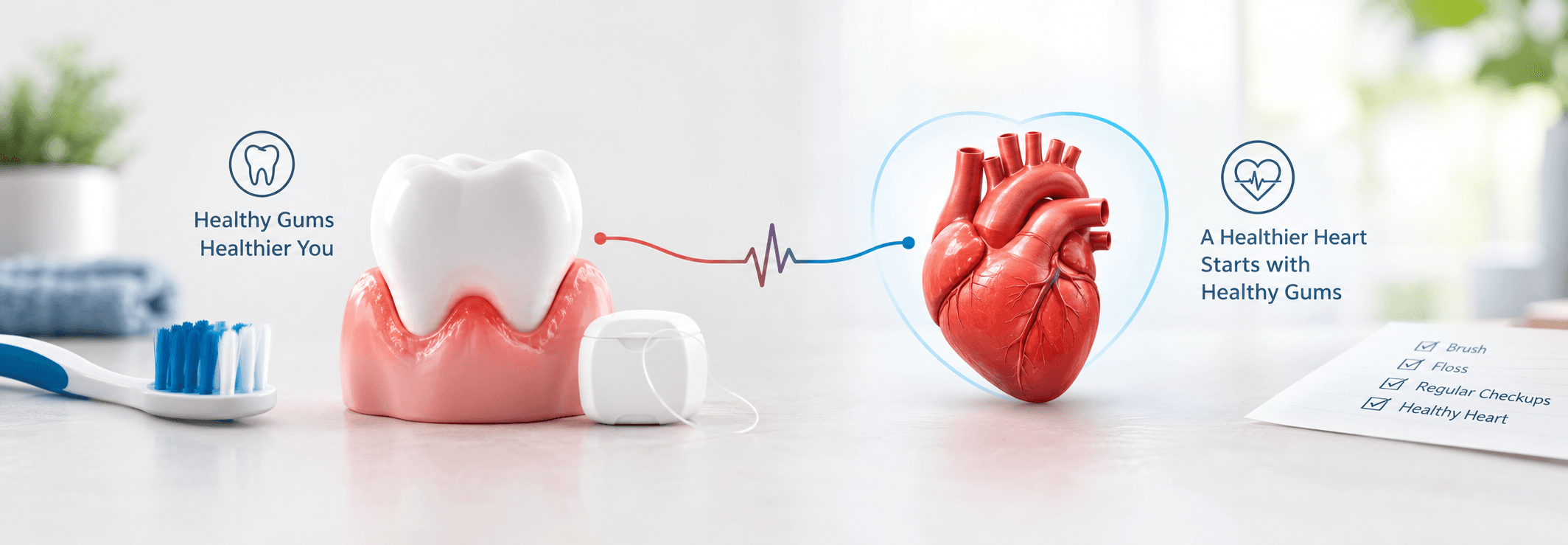


Most of us think of brushing and flossing as being about teeth. But over the past few decades, researchers have repeatedly found that people with gum disease are also more likely to have heart disease. The connection is real, but it's also widely over-simplified online. In this blog, we'll explain what scientists actually know about the gum-heart link, what they don't, and what you can do about it in daily life.
What Is Gum Disease?
Gum disease, or periodontal disease, is a bacterial infection of the tissues around your teeth. It starts as gingivitis (red, swollen, bleeding gums) and, if untreated, can progress to periodontitis, where the infection damages the bone and tissue holding your teeth in place.
Common signs include:
- Gums that bleed when you brush or floss
- Red, swollen, or tender gums
- Persistent bad breath
- Gums pulling away from the teeth
- Loose teeth
Why It's Easy to Miss: In the early stages, periodontitis often causes very few symptoms, and many people only seek treatment once it has progressed significantly.
What Does the Research Say About the Link?
Fact: An updated American Heart Association scientific statement says that observational studies support a significant association between periodontal disease and atherosclerotic cardiovascular disease, but that definitive causation has not been established, and the effect of treating gum disease on heart events remains inconclusive (source: AHA, Circulation).
In plain terms: people with gum disease have more heart disease, but science hasn't yet proven that gum disease causes it, or that treating gums will prevent heart attacks.
Why Might They Be Connected?
Researchers point to two overlapping explanations:
- Inflammation and bacteria: Chronic gum infection can let bacteria enter the bloodstream and keep the body in a state of low-grade, long-term inflammation, which can damage arteries over time.
- Shared risk factors: Smoking, diabetes, obesity, high blood pressure, poor diet, and low physical activity raise the risk of both gum disease and heart disease. Part of the link may simply be that the same habits and conditions drive both.
Why It's Important: This distinction keeps expectations realistic. Good oral care is valuable for your teeth and overall health, but it's one piece of heart protection, not a substitute for controlling blood pressure, cholesterol, and blood sugar.
Indian Context: A Widespread Problem
Fact: A pooled analysis of 30 Indian studies covering over 92,000 adults estimated that around 51% of Indian adults have some form of periodontal disease (source: ScienceDirect). India's National Oral Health Survey found the burden climbing sharply with age, reaching roughly 89% in the 35-44 age group (source: PMC). Tobacco use, whether smoked or chewed, is a major contributor, and our post on the impact of smoking on heart health explains how it harms both your gums and your arteries.
With gum disease this common and heart disease arriving earlier in Indians than in many Western populations, paying attention to oral health is a practical, low-cost habit.
The Diabetes Connection
Diabetes and gum disease have a two-way relationship. High blood sugar makes gum infections more likely and harder to heal, while gum inflammation can make blood sugar harder to control. Since diabetes is also a major heart disease risk factor, people with diabetes benefit especially from regular dental care. Our guide on managing diabetes to protect your heart covers the broader picture.
Who Should Be Extra Careful?
1. People at High Cardiovascular Risk
Fact: The AHA suggests that high-risk individuals with cardiovascular risk factors may particularly benefit from regular dental screenings and targeted periodontal care to help reduce systemic inflammation (source: The Cardiology Advisor).
2. Certain Heart Patients and Dental Procedures
Some people with specific heart conditions have a higher risk of infective endocarditis, an infection of the heart's inner lining or valves that can occur when mouth bacteria enter the bloodstream. This mainly applies to people with prosthetic (artificial) heart valves, a previous history of endocarditis, or certain types of congenital heart disease.
What You Can Do:
- Tell your dentist about any heart condition, artificial valve, or pacemaker before treatment.
- Ask your cardiologist whether you need preventive antibiotics before dental procedures. Do not start or stop antibiotics on your own.
- Keep your mouth as healthy as possible, since good oral hygiene lowers the number of bacteria that can enter your bloodstream in the first place.
3. People on Blood Thinners
If you take blood thinners, tell your dentist so they can plan for bleeding risk. Never stop your medication before a dental procedure without your cardiologist's guidance.
Simple Daily Habits That Help
- Brush twice a day for two minutes with a soft-bristled brush and fluoride toothpaste.
- Clean between your teeth daily with floss or interdental brushes, since brushing alone misses these spaces.
- Visit a dentist at least once a year, or every six months if you have gum disease, diabetes, or heart disease.
- Don't ignore bleeding gums. Bleeding while brushing is a sign of inflammation, not a reason to brush less.
- Limit sugary snacks and drinks, which feed harmful oral bacteria and also raise heart risk.
- Avoid tobacco in all forms, including chewing tobacco and gutka.
- Replace your toothbrush every three months or after an illness.
For a broader screening schedule that fits alongside dental visits, see our heart health after 40 checklist.
When to See a Doctor or Dentist Promptly
- Gums that bleed regularly, or are swollen, painful, or receding
- Loose teeth or a change in how your teeth fit together
- Persistent bad breath or a bad taste in your mouth
- Fever, chills, or unexplained fatigue after a dental procedure, especially if you have a heart valve condition
In Conclusion
The gum-heart connection is real, but it's an association rather than a proven cause. That's no reason to ignore it. Healthy gums protect your teeth, support better blood sugar control, and may help keep inflammation in check, all at very low cost. Treat oral care as one of the simple, everyday habits that supports your heart alongside exercise, a balanced diet, and regular checkups.
Key Takeaways
- People with gum disease are more likely to have heart disease, but the AHA says causation has not been proven.
- The link likely reflects chronic inflammation and shared risk factors like smoking, diabetes, and obesity.
- Around 51% of Indian adults have some form of periodontal disease, and tobacco use is a major driver.
- Diabetes and gum disease worsen each other, so people with diabetes should prioritize dental care.
- Heart patients with artificial valves or past endocarditis should ask their cardiologist about antibiotic cover before dental work.
- Daily brushing, cleaning between teeth, regular dental visits, and avoiding tobacco are simple, low-cost habits that benefit your whole body.
References
- American Heart Association (Circulation): Periodontal Disease and Atherosclerotic Cardiovascular Disease: A Scientific Statement
- Harvard Health Publishing: Gum Disease and Heart Health: Probing the Link
- The Cardiology Advisor: AHA Updates Statement on Periodontal Disease and ASCVD Link
- ScienceDirect: Prevalence of Periodontal Disease Among Adults in India: A Systematic Review and Meta-Analysis
- PMC: Oral Health Concerns in India