
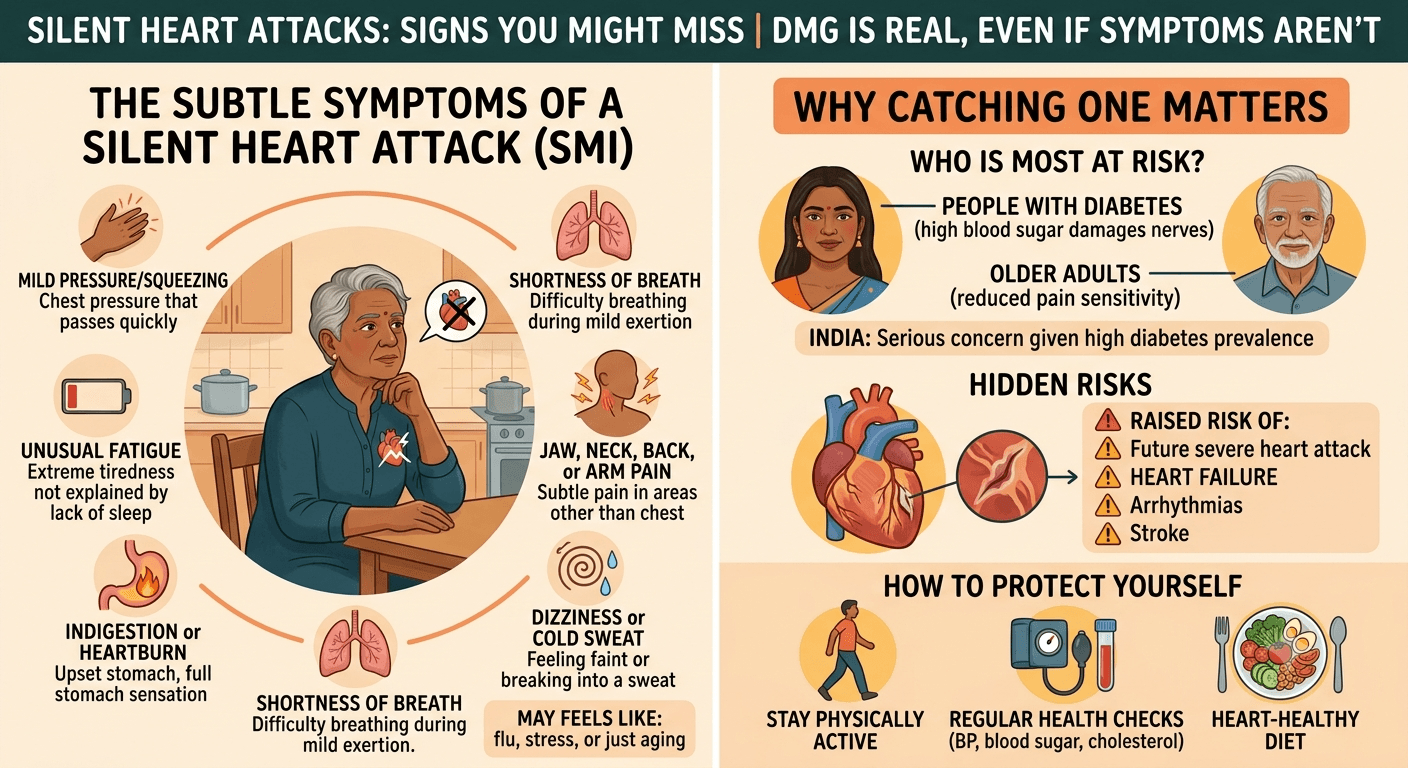


Most people assume a heart attack always announces itself with crushing chest pain and a dramatic collapse. But a silent heart attack can happen with barely any warning at all, sometimes with symptoms so mild they're mistaken for indigestion, fatigue, or a passing flu. Despite having no obvious symptoms, the damage to the heart muscle is just as real as with any other heart attack.
In this blog, we'll explore what a silent heart attack actually is, the subtle signs to watch for, who's most at risk, and why catching one early matters so much for your long-term heart health.
What Is a Silent Heart Attack?
A silent heart attack, medically known as a silent myocardial infarction (SMI), happens the same way as any other heart attack, a blockage cuts off blood flow to part of the heart muscle but without the severe, unmistakable symptoms most people expect.
Fact: Research suggests that silent heart attacks may account for anywhere between 45% and 80% of all heart attacks, depending on the population studied (source: Franciscan Health / Journal of the American Medical Association).
Common Signs of a Silent Heart Attack
Because these symptoms are mild, brief, or easy to explain away, they often go unnoticed. Here's what to watch for:
- Mild pressure, fullness, or squeezing in the chest that passes quickly
- Unusual or unexplained fatigue
- Heartburn-like discomfort or an upset stomach
- A flu-like feeling with no other clear cause
- Discomfort in the jaw, neck, back, or one arm
- Shortness of breath during light activity
- Dizziness, lightheadedness, or breaking into a cold sweat
Why These Symptoms Are Easy to Miss
Because none of these signs match the "textbook" heart attack, they're frequently blamed on something else entirely, a bad meal, a stressful week, or simply "getting older." Many people only discover they've had a silent heart attack weeks or months later, during a routine ECG, echocardiogram, or other test performed for an unrelated reason.
Who Is Most at Risk of a Silent Heart Attack
The risk factors for a silent heart attack are identical to those for a typical heart attack, but a few groups are especially prone to the "silent" pattern:
- People with diabetes: High blood sugar can damage nerves over time, dulling the body's ability to register pain signals from the heart - this is one of the biggest reasons silent heart attacks are so closely linked to diabetes.
- Older adults: Especially those over 75, who may also have reduced pain sensitivity.
- Men: Statistically more likely to experience a silent heart attack than women, though women are more likely to die from one.
- People with a sedentary lifestyle, high blood pressure, high cholesterol, obesity, or a smoking habit - the same everyday risk factors behind heart disease generally.
Indian Context: With India often described as the "diabetes capital of the world" and home to over 77 million people living with diabetes, silent heart attacks are a particularly serious concern here. Studies among India's diabetic population have found significant gaps in awareness of cardiac risk, and separate research among elderly populations found that classic symptoms like chest pain and breathlessness are recognized far more often than subtler warning signs like jaw or neck pain, leaving many silent presentations unrecognized until it's too late.
Why a "Silent" Heart Attack Is Still Dangerous
Even without noticeable symptoms, a silent heart attack still damages heart muscle, and that damage doesn't heal back to normal. Left undiscovered, it can quietly raise your risk of:
- A second, potentially more severe heart attack
- Heart failure
- Abnormal heart rhythms (arrhythmias)
- Stroke
Because the person never sought treatment during the event itself, blood flow to the heart may have stayed blocked for far longer than it would have with immediate medical care — often resulting in greater long-term damage.
How Silent Heart Attacks Are Diagnosed
Since there's rarely an obvious moment that prompts someone to seek care, silent heart attacks are usually discovered incidentally, through:
- Electrocardiogram (ECG/EKG): May show patterns consistent with a past heart attack.
- Echocardiogram: Can reveal areas of the heart that aren't contracting normally due to previous damage.
- Cardiac MRI: Considered more sensitive than ECG for detecting silent heart attacks, especially in older adults.
- Stress tests or cardiac catheterization: Used if a doctor suspects ongoing blockages.
How to Protect Yourself From a Silent Heart Attack
1. Know and Manage Your Risk Factors
What You Can Do:
- Get regular checks for blood pressure, cholesterol, and blood sugar — especially important if you have diabetes or a family history of heart disease.
- Don't skip annual health checkups just because you "feel fine."
2. Don't Ignore Subtle Symptoms
What You Can Do:
- Take unexplained fatigue, breathlessness, or persistent discomfort seriously, even if it doesn't match your idea of a "real" heart attack.
- If something feels off and doesn't go away, get it checked rather than waiting it out.
3. Build Heart-Healthy Habits
What You Can Do:
- Staying physically active regular movement helps manage several risk factors at once.
- Eat a heart-friendly diet and avoid excess salt, sugar, and unhealthy fats.
- Avoid smoking and limit alcohol.
- Manage stress through relaxation techniques like yoga or meditation.
In Conclusion
A silent heart attack can be just as damaging as one that comes with severe chest pain — the danger lies precisely in how easy it is to miss. Knowing your personal risk factors, staying consistent with health checkups, and taking subtle symptoms seriously are the best defenses against a heart attack that never announces itself.
Key Takeaways
- A silent heart attack causes the same damage as a typical one, but with few or no obvious symptoms.
- Estimates suggest silent heart attacks may account for 45–80% of all heart attacks.
- Watch for mild chest discomfort, unusual fatigue, heartburn-like symptoms, jaw/neck/back pain, and unexplained breathlessness.
- People with diabetes and older adults are at especially high risk due to reduced pain sensitivity.
- Silent heart attacks are usually diagnosed later through ECG, echocardiogram, or cardiac MRI.
- Regular health checkups and not dismissing subtle symptoms are the most effective ways to catch one early.