
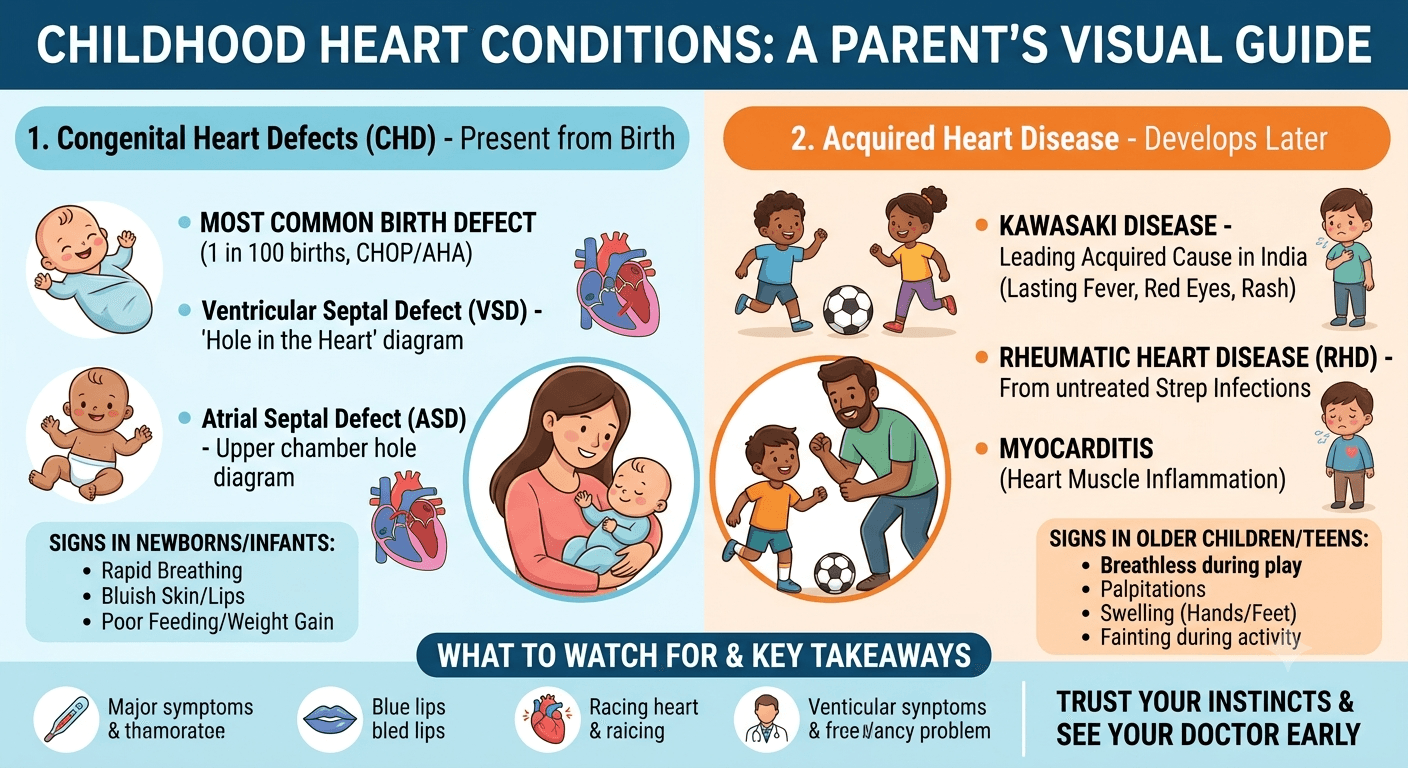


As a parent, it's natural to worry about your child's health, and the heart is often the last place you'd expect trouble to show up in a young child. Yet heart problems in children are more common than most parents realize, and they don't always look the way you'd expect.
Some are present from birth, while others develop later due to infections or immune reactions. Knowing what to watch for can make the difference between early treatment and a missed diagnosis.
In this blog, we'll walk through the two main types of childhood heart problems, the warning signs at different ages, what causes them, and when it's time to see a doctor.
Understanding the Two Types of Heart Problems in Children
Heart conditions in children generally fall into two categories:
Congenital Heart Defects (CHD): Structural problems with the heart that a child is born with, caused by the heart not developing normally before birth.
Acquired Heart Disease: Heart problems that develop after birth, often due to infections, immune reactions, or other illnesses.
Fact: Congenital heart defects affect approximately 1 in every 100 babies born, making them the most common type of birth defect worldwide (source: CHOP/AHA).
Common Congenital Heart Defects
- Ventricular Septal Defect (VSD): A hole in the wall between the heart's two lower chambers, sometimes called a "hole in the heart."
- Atrial Septal Defect (ASD): A similar hole between the upper chambers, which can sometimes go undetected until the teenage years.
- Atrioventricular Canal Defect: A more complex combination of septal and valve abnormalities.
Common Acquired Heart Conditions
Kawasaki Disease: An illness that inflames blood vessels, including the coronary arteries, and has now overtaken rheumatic fever as the leading cause of acquired childhood heart disease in many countries, including India.
Rheumatic Heart Disease (RHD): Caused by repeated untreated strep throat infections leading to rheumatic fever, which can permanently damage heart valves. RHD remains a major concern in India, contributing to well over 100,000 deaths every year.
Myocarditis: Inflammation of the heart muscle, often triggered by a viral infection.
Common Signs and Symptoms Parents Should Watch For
Symptoms vary significantly depending on your child's age and the type of heart problem involved.
1.Signs in Newborns and Infants
- Rapid or labored breathing
- Bluish tint to lips, skin, or nails (cyanosis)
- Poor feeding or trouble gaining weight
- Excessive sweating during feeding
- Extreme tiredness or lethargy
Why It's Important: Serious congenital heart defects are usually noticed within the first days or weeks after birth, since a baby's body cannot yet compensate for major structural problems. This is why routine newborn screening (pulse oximetry) is done shortly after birth.
What You Can Do:
Don't dismiss unusually fast breathing or bluish skin as "just a cold" — seek medical attention promptly.
Track feeding patterns and weight gain at pediatric visits.
2.Signs in Older Children and Teens
- Getting unusually breathless or tired during play or exercise
- Swelling in the hands, ankles, or feet
- Chest pain or palpitations (a racing or irregular heartbeat)
- Fainting or dizziness during physical activity
- A heart murmur detected during a routine check-up
Why It's Important: Milder congenital defects such as small ASDs and acquired conditions like rheumatic heart disease can go unnoticed for years until a child's activity level increases and the heart is put under more strain.
What You Can Do:
- Mention any unexplained fatigue or breathlessness during sports to your pediatrician.
- Don't panic over a heart murmur - most are harmless "innocent murmurs," but they should still be evaluated.
3.Signs of Kawasaki Disease (Usually Under Age 5)
- Fever lasting more than 4–5 days
- Red, cracked lips and a "strawberry" red tongue
- Red eyes without discharge
- Rash on the body
- Swollen hands and feet, sometimes with peeling skin later
Why It's Important: Kawasaki disease needs treatment within the first 10 days of fever to prevent lasting damage to the coronary arteries. Delayed diagnosis significantly raises the risk of complications.
What You Can Do: If your child has a persistent fever for more than 4 days along with any of the above symptoms, seek medical care immediately rather than waiting it out.
What Causes Heart Problems in Children
The exact cause of most congenital heart defects isn't fully understood, but researchers point to a mix of factors:
- Genetic factors: Family history or chromosomal conditions like Down syndrome.
- Maternal health during pregnancy: Infections such as rubella, poorly controlled diabetes, or certain medications taken during pregnancy.
- Lifestyle factors: Smoking, alcohol use, or exposure to secondhand smoke during pregnancy.
Acquired conditions like Kawasaki disease and rheumatic heart disease, on the other hand, are linked to infections or the body's immune response rather than anything that happens during pregnancy.
When to See a Doctor
While many symptoms above deserve a routine pediatric visit, some warrant urgent care. Contact a doctor immediately if your child has:
- Bluish lips, skin, or nails
- Severe difficulty breathing
- Fainting during physical activity
- A persistent high fever lasting more than 4–5 days, especially with rash or red eyes
- Chest pain accompanied by breathlessness or dizziness
Your pediatrician may refer your child to a pediatric cardiologist - a specialist trained specifically in diagnosing and treating heart conditions in children - for further evaluation, which may include an echocardiogram, ECG, or chest X-ray.
Tips for Parents: Supporting a Child With a Heart Condition
- Stay consistent with follow-up appointments. Many childhood heart conditions require ongoing monitoring even after treatment.
- Don't over-restrict activity without medical guidance. Many children with treated or mild heart conditions can lead active, normal lives — always confirm activity limits with your child's cardiologist rather than assuming restrictions.
- Educate siblings and family so the child doesn't feel isolated or "different."
- Watch for developmental milestones and discuss any delays with your pediatrician, since some heart conditions can affect a child's energy levels and growth.
- Lean on support networks - organizations and other parents who've navigated a similar diagnosis can be a valuable source of practical advice and emotional support.
In Conclusion
Most children with heart problems, whether congenital or acquired, go on to live full and active lives, especially when the condition is caught and treated early. As a parent, the most powerful tool you have is awareness: knowing the signs, trusting your instincts when something feels off, and not hesitating to seek medical care. Regular pediatric check-ups combined with prompt attention to unusual symptoms give your child the best possible start.
Key Takeaways:
- Heart problems in children fall into two categories: congenital (present at birth) and acquired (developing later, often from infections).
- Congenital heart defects affect roughly 1 in 100 babies, making them the most common birth defect.
- Watch for breathing difficulty, bluish skin, poor feeding, and fatigue in infants; breathlessness, palpitations, and fainting during activity in older children.
- Kawasaki disease - marked by prolonged fever, red eyes, rash, and swollen hands/feet - needs treatment within 10 days to prevent lasting heart damage.
- Rheumatic heart disease, caused by untreated strep infections, remains a significant cause of acquired heart disease in India.
- A pediatric cardiologist can diagnose and manage most childhood heart conditions, and early detection greatly improves outcomes.