


Most of us picture a heart attack the same way: sudden, crushing chest pain that makes someone clutch their chest and collapse. But for millions of women, a heart attack doesn't look like that at all. It can feel like unusual tiredness, mild nausea, or a dull ache in the jaw or back, symptoms so ordinary that they're often mistaken for stress, indigestion, or simply a bad day. This gap between what a heart attack "should" feel like and what women actually experience is one of the biggest reasons heart disease remains under-recognized and under-treated in women. In this blog, we'll break down why symptoms differ, what to watch for, and how women can protect themselves.
Why Heart Attack Symptoms Differ Between Women and Men
Heart disease isn't a "one size fits all" condition. Several biological and hormonal factors change how it develops and how it feels in women.
Biological Differences
Women generally have smaller hearts and narrower blood vessels than men. Heart disease in women more often involves blockages in the tiny blood vessels that branch off the main coronary arteries, a pattern known as microvascular disease. Because the blockages sit in smaller, harder-to-detect vessels, the symptoms tend to be subtler and more spread out across the body, rather than one sharp point of chest pain.
Hormonal Differences
Before menopause, estrogen offers women a degree of natural protection against heart disease. After menopause, when estrogen levels drop, that protection fades and a woman's risk of heart disease rises sharply. This hormonal shift is a major reason heart disease risk in women increases noticeably in their late 40s and 50s.
Common Heart Attack Symptoms in Women
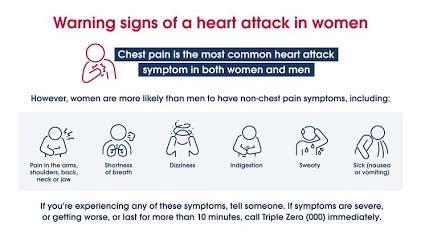
Chest pain or pressure is still the most common symptom for women, just as it is for men. But women are considerably more likely than men to also experience — or sometimes only experience — symptoms that don't feel like a "classic" heart attack at all:
- Unusual or extreme fatigue, even from light activity
- Shortness of breath, with or without chest discomfort
- Nausea, vomiting, or heartburn-like discomfort
- Pain in the jaw, neck, shoulder, upper back, or upper abdomen
- Dizziness or lightheadedness
- Cold sweats
Interesting Fact: Nearly 1 in 3 heart attacks happen without any chest pain at all — and this is especially common in women. Doctors now avoid calling these "atypical" symptoms, since they're actually quite typical for women; they're simply less recognized.
Why Women's Symptoms Are So Often Missed
There are a few overlapping reasons women's heart attacks get missed or diagnosed late:
- Symptom mismatch: Because women's symptoms rarely match the "textbook" heart attack, both patients and sometimes doctors are slower to suspect the heart as the cause.
- Everyday explanations: Fatigue, nausea, or back pain are easy to blame on stress, poor sleep, or apulled muscle, so women often wait before seeking help.
- Research gap: For decades, most heart disease research was conducted on male patients, so awareness and diagnostic tools were built primarily around men's symptoms.
- Prioritizing others: Many women are quick to attend to a family member's health needs but slower to act on their own warning signs.
Indian Context: Research on Indian women with coronary artery disease has found a pattern of severe, extensive blockages appearing at a relatively young age, often with few of the traditional risk factors doctors typically look for. Combined with women in India frequently delaying care due to family responsibilities or limited awareness, this makes early symptom recognition especially important.
Heart Disease Risk Factors That Matter More for Women
Women share the traditional heart disease risk factors with men — high blood pressure, high cholesterol, diabetes, smoking, and obesity. But a few additional factors carry extra weight for women's heart health:
• Menopause: The drop in estrogen after menopause significantly raises cardiovascular risk.
• Pregnancy complications: Conditions like gestational diabetes or pregnancy-related high blood pressure (preeclampsia) increase future heart disease risk.
• Autoimmune conditions: Diseases like rheumatoid arthritis and lupus, which are more common in women, are linked to higher cardiovascular risk.
• Mental health: Depression and chronic stress affect women's heart health more strongly than previously recognized.
What Women Can Do to Protect Their Heart
• Know your personal risk factors, including family history, blood pressure, and cholesterol levels, and get them checked regularly.
• Don't dismiss unusual fatigue, breathlessness, or persistent discomfort as "nothing" — track and report these symptoms to a doctor.
• Ask directly about heart health during medical visits, especially after menopause or a complicated pregnancy.
• Stay physically active, eat a heart-healthy diet, and avoid smoking — the same fundamentals that protect anyone's heart.
• Manage stress and mental health, which play a larger role in women's cardiovascular risk than commonly assumed.
When to Seek Emergency Care
If you experience chest discomfort, unusual fatigue combined with breathlessness, jaw or back pain with no clear cause, or a sudden feeling that something is seriously wrong, don't wait to "see if it passes." Call for emergency medical help immediately. Acting within the first few minutes can make the difference between a full recovery and lasting heart damage.
Key Takeaways
- Women's heart attack symptoms often differ from men's due to smaller blood vessels and hormonal factors, especially after menopause.
- Chest pain is still common in women, but fatigue, nausea, breathlessness, and jaw or back pain are frequently the more prominent signs.
- These symptoms are often missed because they don't match the "classic" heart attack picture — not because they're rare.
- Menopause, pregnancy complications, and autoimmune conditions add extra risk factors specific to Women.
- Knowing your personal symptoms and risk factors, and acting on them without delay, can be lifesaving.