
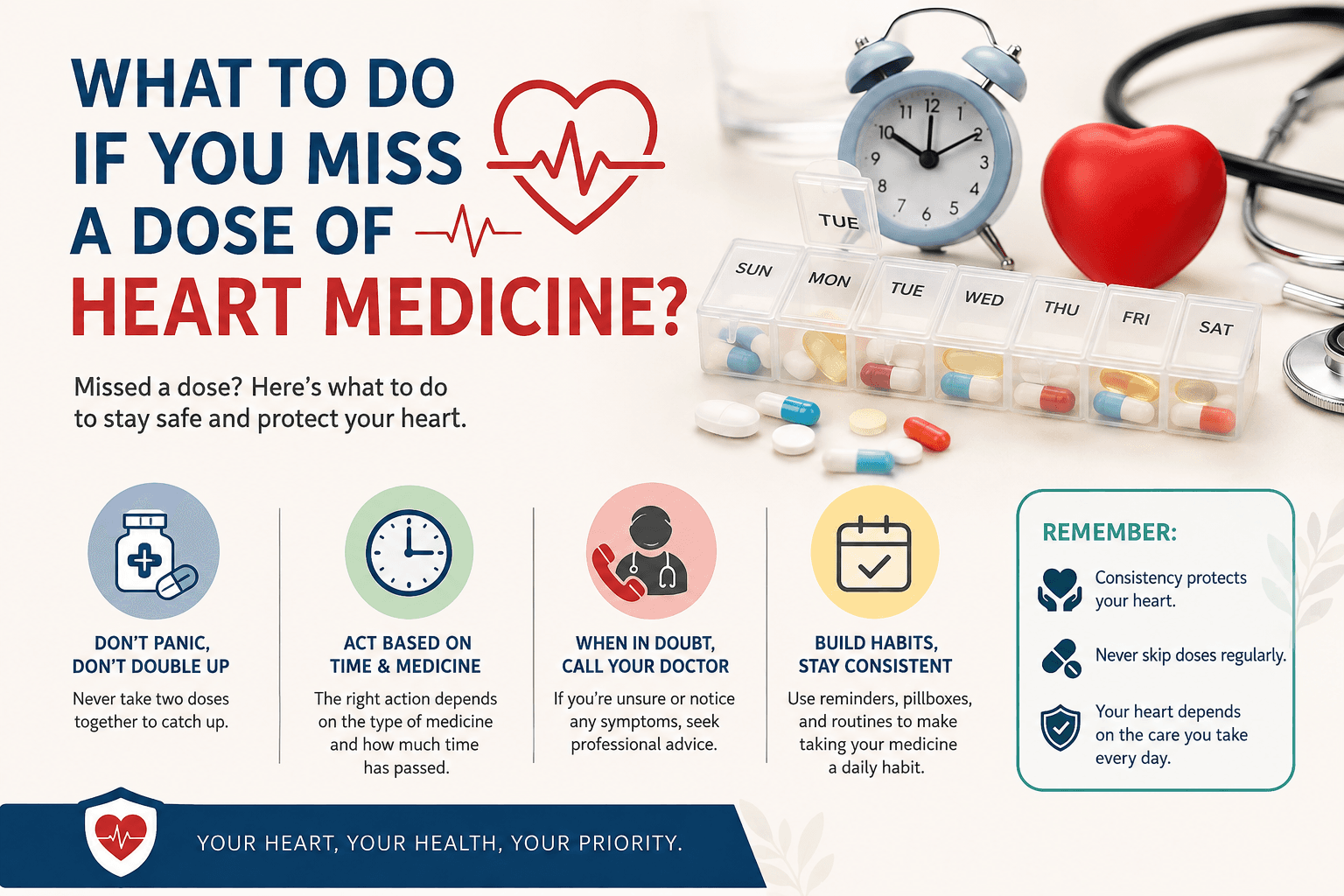


Life gets busy, and forgetting a pill now and then happens to almost everyone. But when it's a heart medication, that moment of "did I take it or not?" can bring on real worry — and rightly so, since the correct response isn't the same for every drug. In this blog, we'll walk through exactly what to do if you miss a dose of the most common types of heart medicine, when it's safe to simply catch up, and when you should call your doctor instead of guessing.
If you haven't yet, it's worth reading our guide on how to take heart medicines safely first, since missed doses are just one part of building a safe medication routine.
The Golden Rule: Never Double Up
Before getting into specifics, there's one rule that applies to almost every heart medication:
Fact: Taking two doses together to "catch up" on a missed one doesn't undo the missed dose - it simply raises your risk of side effects, from lightheadedness with blood pressure medicine to dangerous bleeding with blood thinners (source: Mayo Clinic).
If you're ever unsure, the safest move is a quick call to your pharmacist or doctor rather than guessing.
What to Do If You Miss a Dose of Blood Pressure Medicine
- If it's shortly after your usual time, take the dose as soon as you remember.
- If it's close to your next scheduled dose (generally within around 12 hours), skip the missed one and take your next dose at the normal time.
- Never take an extra pill to make up for it.
- If you've missed more than one dose in a row, get back on your regular schedule as soon as possible and mention it to your doctor at your next visit.
Most blood pressure medications remain active in your system for around 24 hours, so a few hours' delay generally won't cause a dangerous spike but consistency still matters for long-term control. Our guide on side effects of blood pressure medications covers more on what to watch for if your readings become inconsistent.
What to Do If You Miss a Dose of a Blood Thinner
Blood thinners deserve extra caution, since missing a dose can noticeably reduce your protection against clots, sometimes within just a few hours.
What You Can Do:
- Take the missed dose as soon as you remember, unless your doctor has told you otherwise.
- If it's almost time for your next dose, skip the missed one and resume your normal schedule — do not double up.
- If you miss more than one dose, or you're unsure what to do, call your doctor or pharmacist rather than waiting.
Why It's Important: Some newer blood thinners wear off faster than older ones like warfarin, meaning even a single missed dose can meaningfully raise clotting risk for conditions like atrial fibrillation. You can read more about how these medications work in our post on common blood thinners for heart patients.
What to Do If You Miss a Dose of Other Heart Medicines
H3-style breakdown by drug type:
- Beta-blockers or ACE inhibitors: Take the missed dose as soon as you remember, unless it's close to your next one — then skip it. Never stop these medicines abruptly, even after a missed dose, since sudden discontinuation can cause a rebound effect. Our comparison of beta-blockers vs. ACE inhibitors explains more about how each works.
- Statins (cholesterol-lowering medicine): Since these work over the long term, a single missed dose is not an emergency - simply take your next dose as scheduled.
- Diuretics: If you miss a dose and it's still earlier in the day, take it as soon as you remember; if it's evening, it may be worth skipping to avoid nighttime bathroom trips - check with your doctor for personalized guidance.
When to Call Your Doctor Immediately
- You've missed more than one dose of a blood thinner or a medication for a serious heart rhythm condition.
- You're experiencing symptoms like chest pain, severe dizziness, irregular heartbeat, or unusual bruising/bleeding after a missed or doubled dose.
- You genuinely aren't sure what to do for your specific medication — a quick call is always safer than guessing.
How to Avoid Missing Doses in the Future
- Build a routine: Pair your medicine with an existing daily habit, like breakfast or brushing your teeth.
- Use a pillbox or app: A weekly pillbox or a medication-reminder app makes it easy to see at a glance whether you've taken today's dose.
- Set alarms: A simple phone alarm at your usual dosing time can prevent most missed doses.
- Keep a backup supply: Refill prescriptions a few days before you run out, so a delayed refill doesn't turn into a missed dose.
In Conclusion
Missing a dose of your heart medication isn't a reason to panic, but it is a reason to respond correctly rather than guess. The right response depends on the specific medicine, how long it's been, and how many doses you've missed when in doubt, your pharmacist is only a phone call away. Building small habits like alarms and pillboxes can help make missed doses rare rather than routine.
Key Takeaways
- Never double up on a missed dose - this is true across almost all heart medications.
- For blood pressure medicine, take the missed dose if it's still well before your next one; otherwise, skip it and resume normally.
- Blood thinners need extra caution even one missed dose can meaningfully raise clotting risk for some patients.
- Never stop beta-blockers or ACE inhibitors abruptly, even after a missed dose.
- Call your doctor or pharmacist if you're unsure, have missed multiple doses, or notice symptoms like chest pain, bleeding, or irregular heartbeat.
- Pillboxes, phone alarms, and routine-pairing are simple, effective ways to prevent missed doses going forward.
References
- Mayo Clinic Press: Don't Miss a Dose: Expert Advice for Managing Meds
- SingleCare: What Should You Do If You Miss a Dose of Blood Thinner?
- Brain & Life (American Academy of Neurology): What Should You Do If You Miss a Medication Dose?
- NHS Specialist Pharmacy Service: Advising on Missed or Delayed Doses of Medicines